
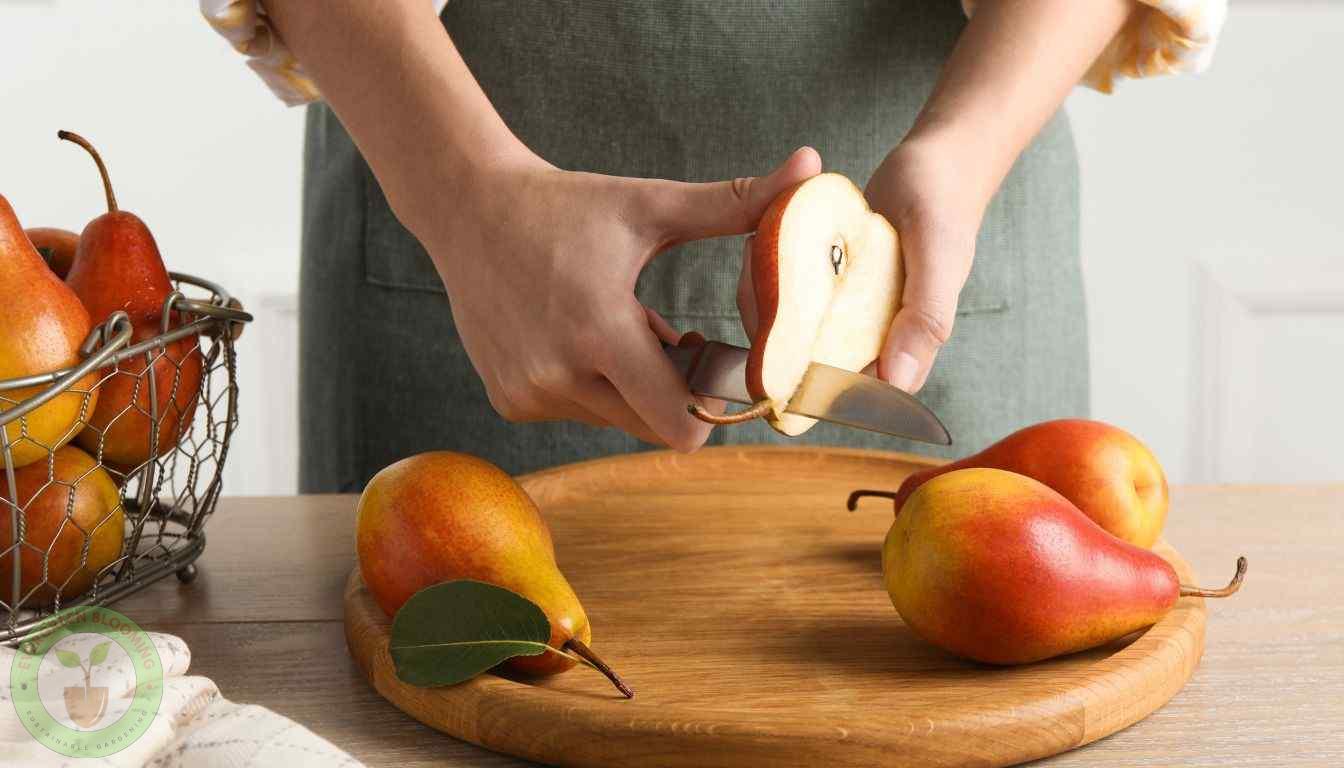
Ever wondered why cutting a pear seems more challenging than slicing other fruits? Mastering the art of how to cut a pear can transform your culinary experience. It unlocks a world of delicious possibilities.
As a passionate home cook, I’ve found that fruit cutting methods are key. Pears are full of nutrients and super versatile in the kitchen. Whether it’s a quick snack or an elegant dessert, knowing how to cut a pear is crucial.
In this guide, I’ll show you everything you need to know about preparing these delicious fruits. From picking the perfect pear to using precise cutting techniques, you’ll become a pear-cutting pro in no time.
Key Takeaways
- Learn professional pear cutting techniques.
- Understand different pear varieties.
- Discover multiple ways to slice and dice pears.
- Prevent browning and maintain fruit quality.
- Explore creative culinary uses for cut pears.
Why Cut a Pear?
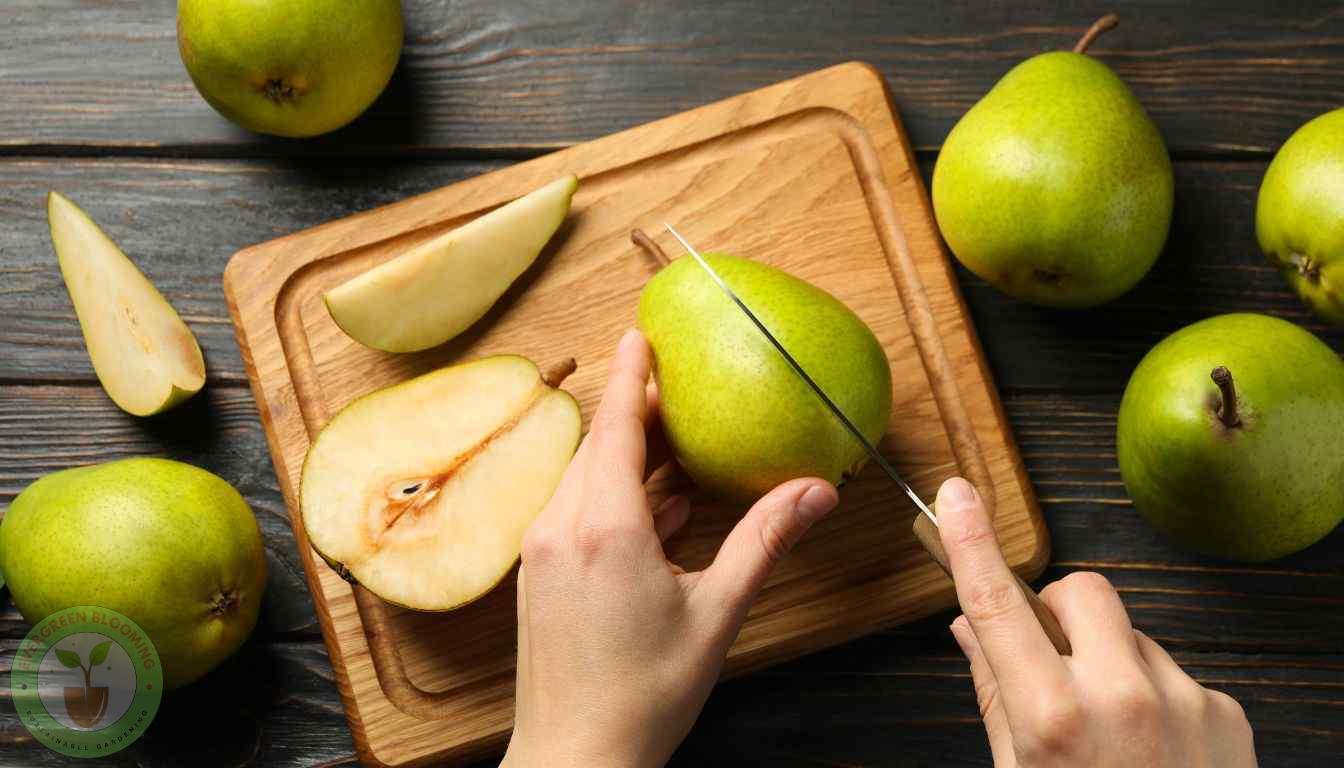
Pears are more than just a sweet treat – they’re a culinary powerhouse waiting to be explored. As a passionate home cook, I’ve discovered countless ways to transform these delightful fruits into incredible dishes that impress family and friends.
Benefits of Eating Pears
These juicy fruits pack a serious nutritional punch. My culinary preparation tips always start with understanding the health benefits. Pears are nutritional superstars that offer:
- High fiber content for digestive health.
- Essential plant compounds that support vision.
- Vitamins that boost overall wellness.
Versatile Uses for Pears
Understanding culinary preparation tips means recognizing the versatility of pears. They’re not just a snack – they’re a kitchen chameleon that can elevate multiple dishes.
- Raw in salads for a crisp texture.
- Roasted as a side dish.
- Blended into smoothies.
- Caramelized for desserts.
Pears in Cooking and Baking
My favorite culinary preparation tips involve transforming pears into something magical. Whether you’re baking a rustic tart or creating a savory sauce, pears bring a unique sweetness and depth to recipes.
Pro tip: Choose ripe pears for the most intense flavor in your cooking adventures!
From breakfast to dinner, these fruits offer incredible versatility that can spark creativity in any kitchen. Learning to cut and prepare pears opens up a world of delicious possibilities.
Choosing the Right Pear
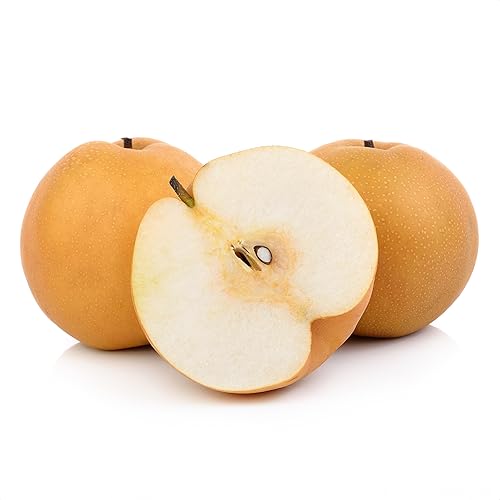
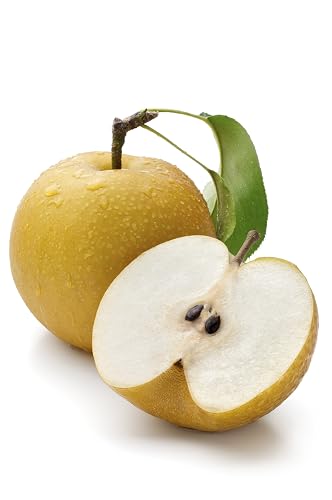
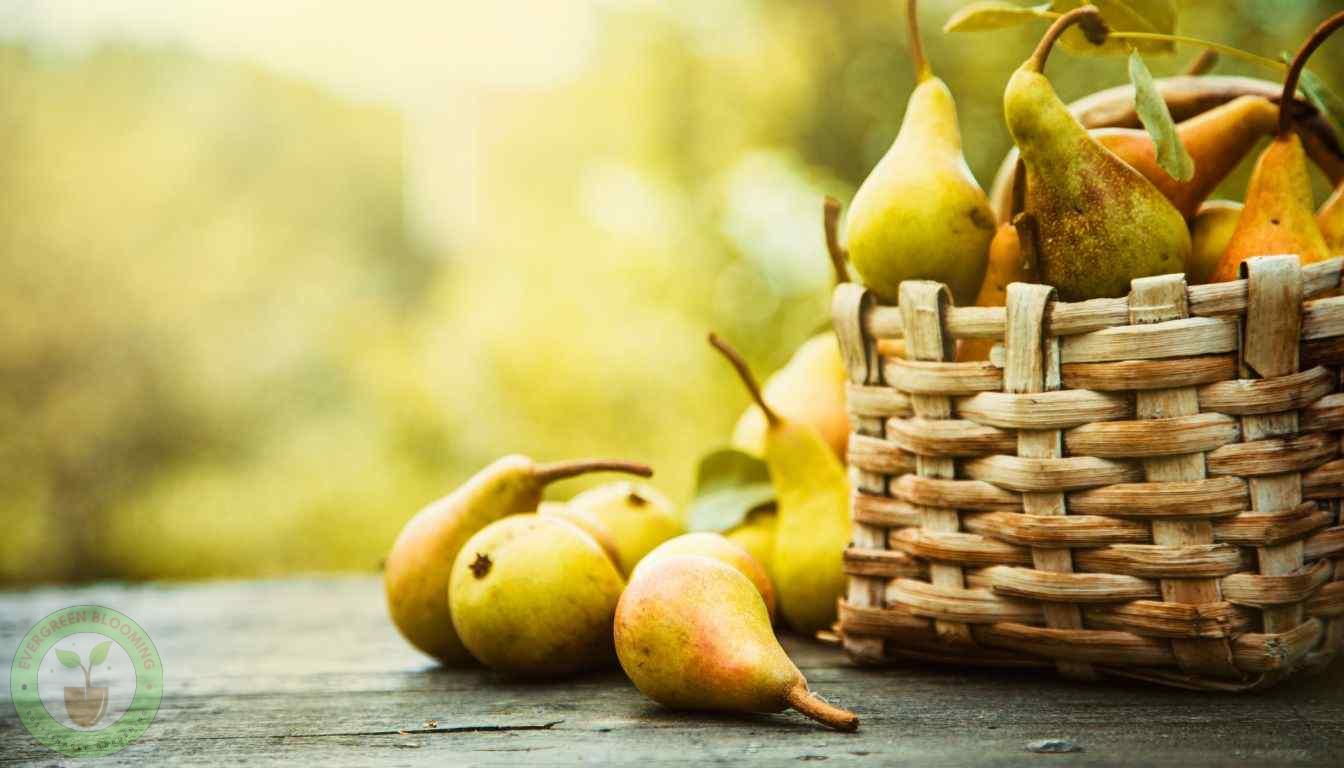
Choosing the perfect pear is key before you start learning how to cut a pear. Not all pears are the same. Knowing their unique traits can enhance your cooking.
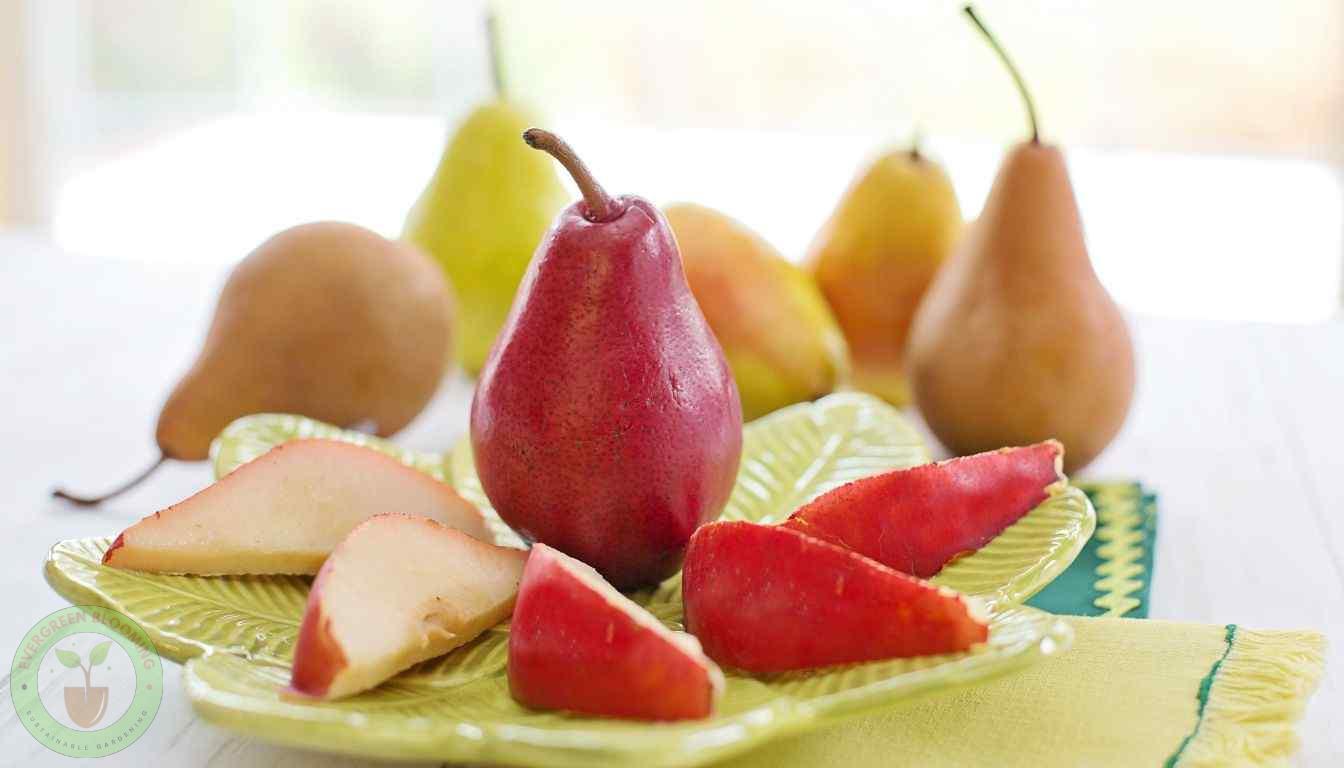
When you’re ready to cut a pear, think about a few important things. These things affect the pear’s taste, texture, and quality.


Types of Pears to Explore
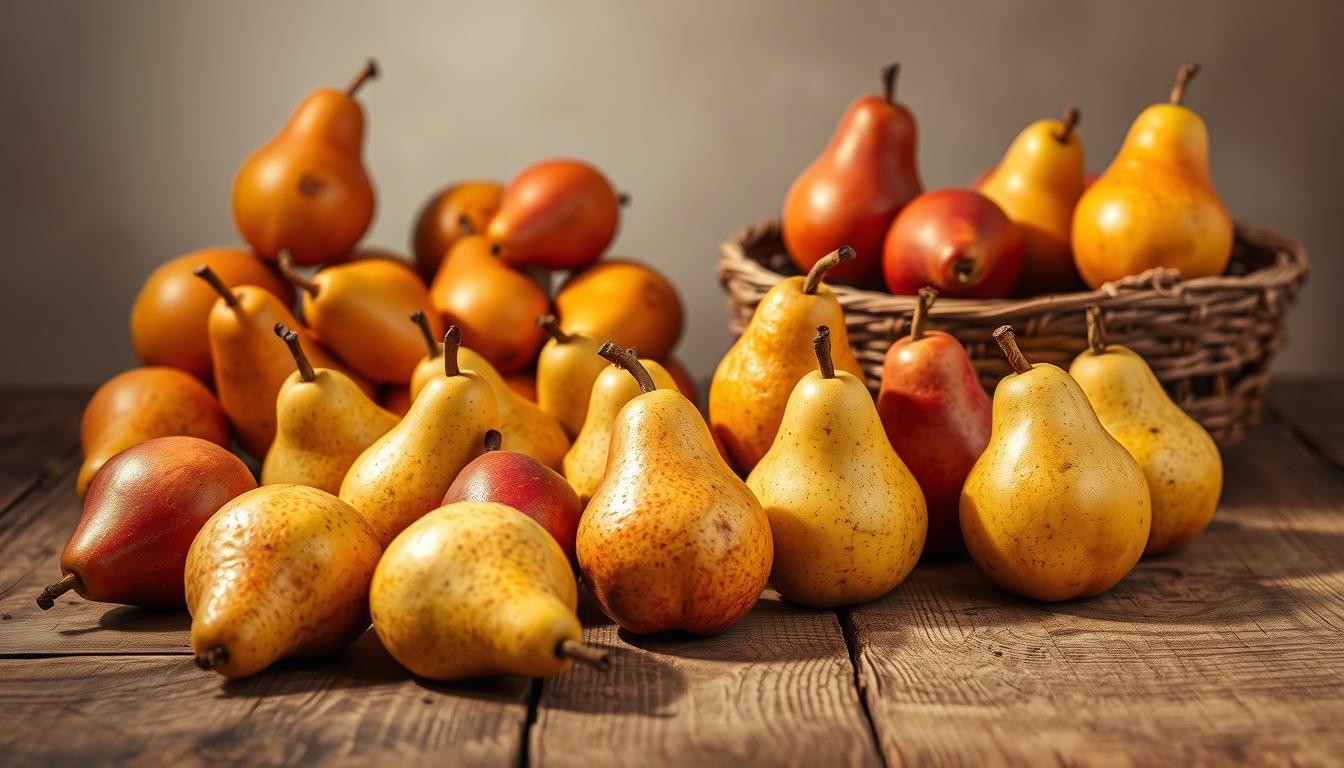
- Bartlett: Sweet and juicy, perfect for fresh eating
- Bosc: Crisp texture, ideal for baking and poaching
- Anjou: Mild flavor, great for salads
- Comice: Butter-soft, excellent for cheese plates
Understanding Pear Ripeness
Pears ripen from the inside out. To check if a pear is ripe, gently press it near the stem. If it’s slightly soft, it’s ripe.
| Ripeness Indicator | What to Look For |
|---|---|
| Stem Area | Soft when lightly pressed |
| Color | Yellowing or changing from green to golden |
| Fragrance | Sweet, subtle aroma near stem |
Organic vs. Conventional Pears
When picking pears, think about what you prefer. Organic pears are grown without harmful pesticides. Conventional pears might be cheaper. Both are good for cutting techniques.
Pro tip: Always wash your pears well before cutting!
Essential Tools for Cutting Pears
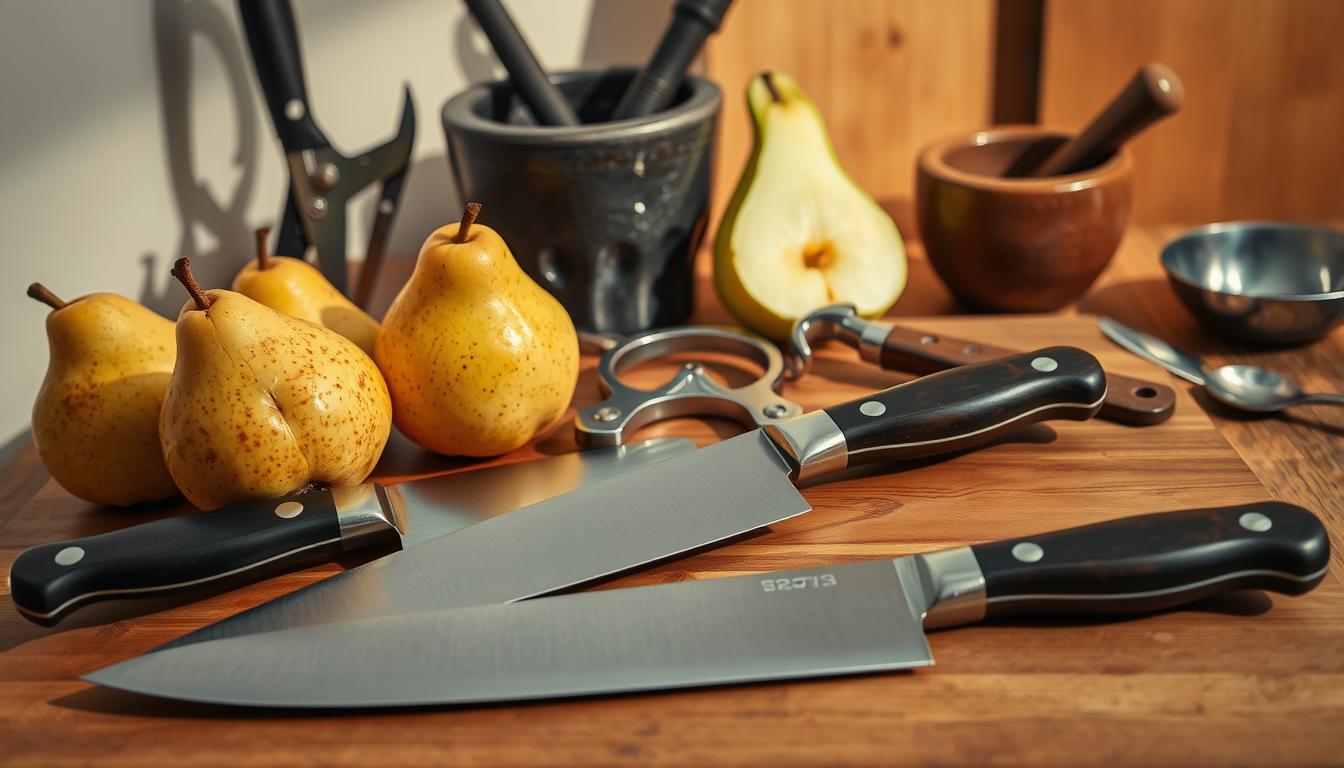
Learning kitchen knife skills starts with the right tools. Pears require specialized tools for clean cuts and safe preparation. Let’s explore the key tools for better pear cutting.
Selecting the Perfect Knife
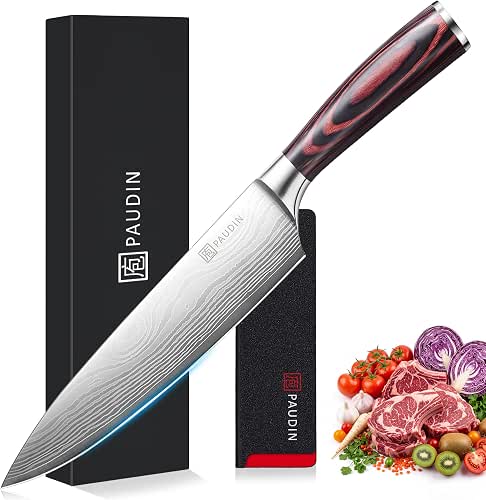
For cutting pears, a sharp chef’s knife or paring knife is best. They offer the precision and control for various cuts. A 7-8 inch blade is ideal for most pear sizes.
- Chef’s knife: Ideal for larger cuts and wedges
- Paring knife: Perfect for detailed work and intricate cuts
- Serrated knife: Useful for very ripe pears
Choosing the Right Cutting Board
Your cutting surface is as important as your knife. I like wooden or plastic boards for stability and to protect your knife. Please avoid using glass or marble, as they can quickly dull your blades.

Peeling Tools for Perfect Preparation
A vegetable peeler is handy, though not essential. Choose a Y-shaped peeler with a good grip for smooth strokes. It makes pear prep easier.
Pro tip: Always keep your tools clean and sharp for the best kitchen knife skills and fruit cutting methods!
Preparing the Pear
Before you start cutting your pear, getting it ready is crucial. These tips will make your pear a tasty addition to any dish.
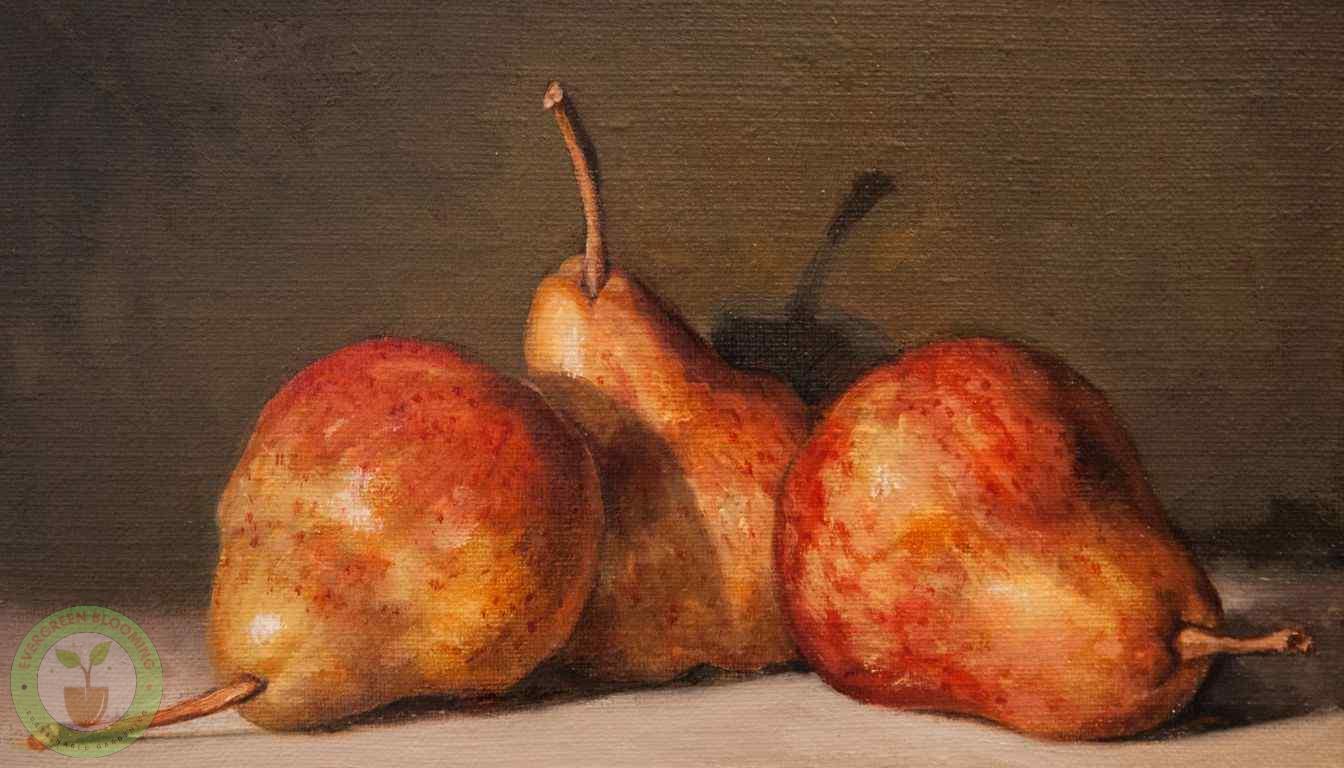
Preparing a pear involves several key steps. These steps can enhance your cooking and eating experience. Let’s go through the key steps to prepare your pear for slicing.
Washing Your Pear
Cleaning your pear is a vital step. Dirt, pesticides, and bacteria can be on the fruit’s surface. So, it’s essential to wash it well.
- Rinse the pear under cool running water.
- Gently rub the surface with your hands.
- Use a clean produce brush for stubborn dirt.
- Pat dry with a clean kitchen towel.
Drying the Pear
After washing, drying the pear is essential. It prevents water from diluting the pear’s flavors and helps with cutting.
- Use a clean, soft kitchen towel.
- Gently pat the pear dry.
- Allow it to air dry for a few minutes.
- Ensure the surface is completely dry before cutting.
Optional: Peeling the Pear
Peeling is up to you. Some recipes need it, while others don’t.
| Scenario | Peeling Recommendation |
|---|---|
| Smooth desserts | Recommended to peel |
| Rustic salads | Keep skin on for texture |
| Baking | Depends on recipe |
Pro tip: If you decide to peel, use a sharp vegetable peeler for smooth, even removal.
Basic Cutting Techniques
Learning how to slice pears can change your cooking game. Whether you’re making a quick snack or a fancy dish, the right cutting skills matter. I’ll show you three key ways to cut pears that will boost your kitchen skills.
Slicing Pears into Wedges
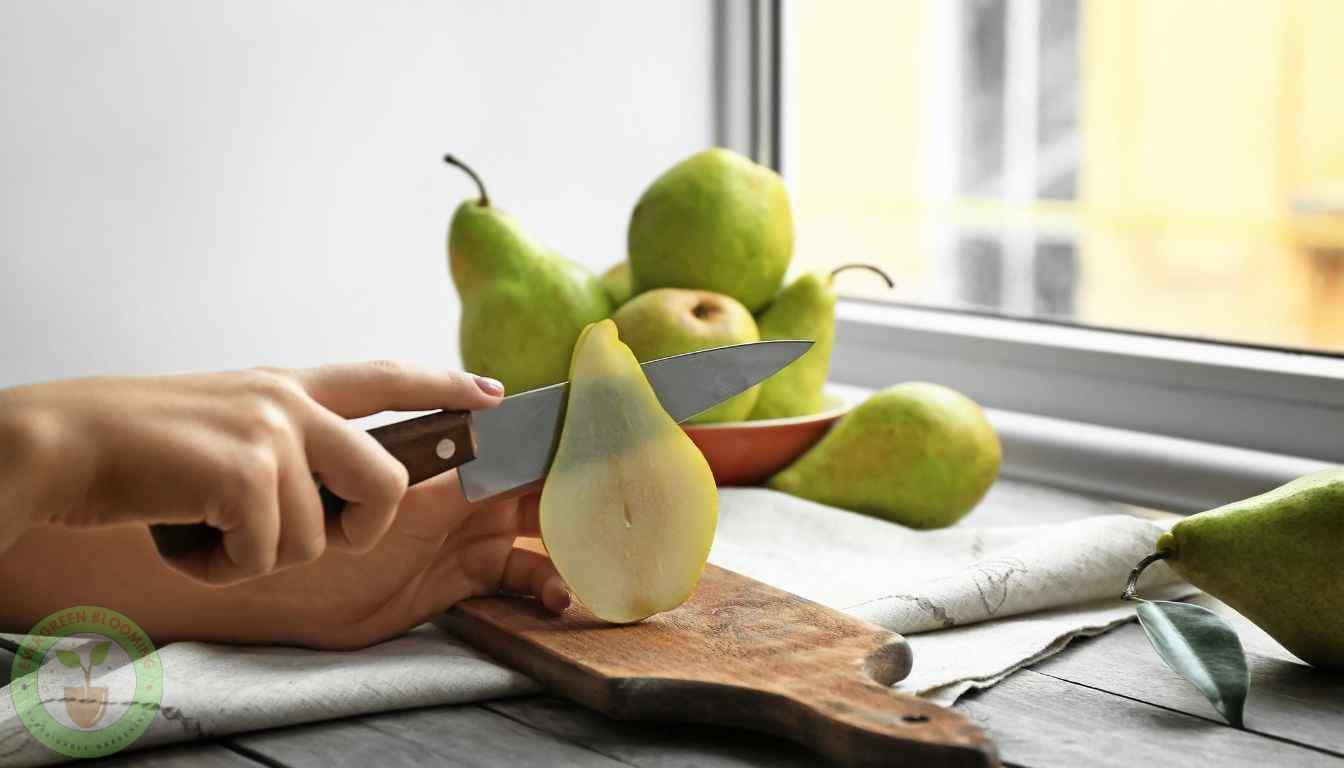
Wedges are great for snacks and cheese boards. Here’s how to do it:
- Wash the pear under cool water.
- Dry it with a clean towel.
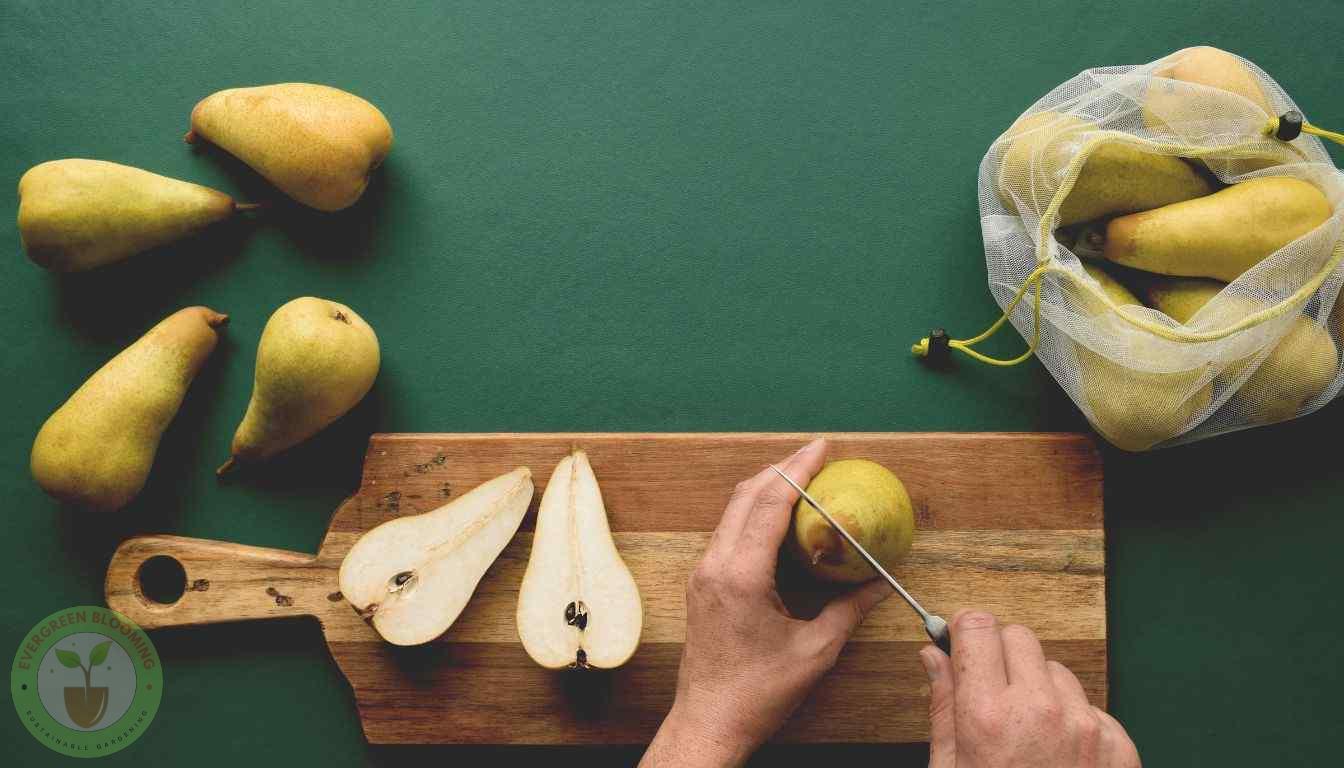
- Cut it lengthwise from the stem to the base.
- Remove the core with a spoon.
- Slice each half into 4-6 even wedges.
Dicing a Pear: A Simple Method
Dicing pears can lead to many tasty dishes. For uniform cubes in salads or baking:
- Wash and dry the pear.
- Cut in half lengthwise.
- Remove the core.
- Slice into ½ inch thick plank-like pieces.
- Cross-cut the planks to create uniform cubes.
Halving a Pear with Ease
Halving is a basic skill for pear prep. It’s useful for poaching, stuffing, or desserts:
- Clean the pear under running water.
- Pat dry with a clean cloth.
- Place on a stable cutting board.
- Use a sharp knife to cut from the stem to the base.
- Gently remove the core with a spoon.
Pro tip: Always use a sharp knife and cut away from your body to ensure safe fruit cutting methods.
Try these pear-slicing techniques and you’ll soon feel confident in preparing this delicious fruit for any event.
Creative Ways to Cut Pears
Improving your pear slicing can turn simple fruit into amazing dishes. With a few easy tips, you’ll impress everyone with your creations. Your dishes will look like a pro made them.
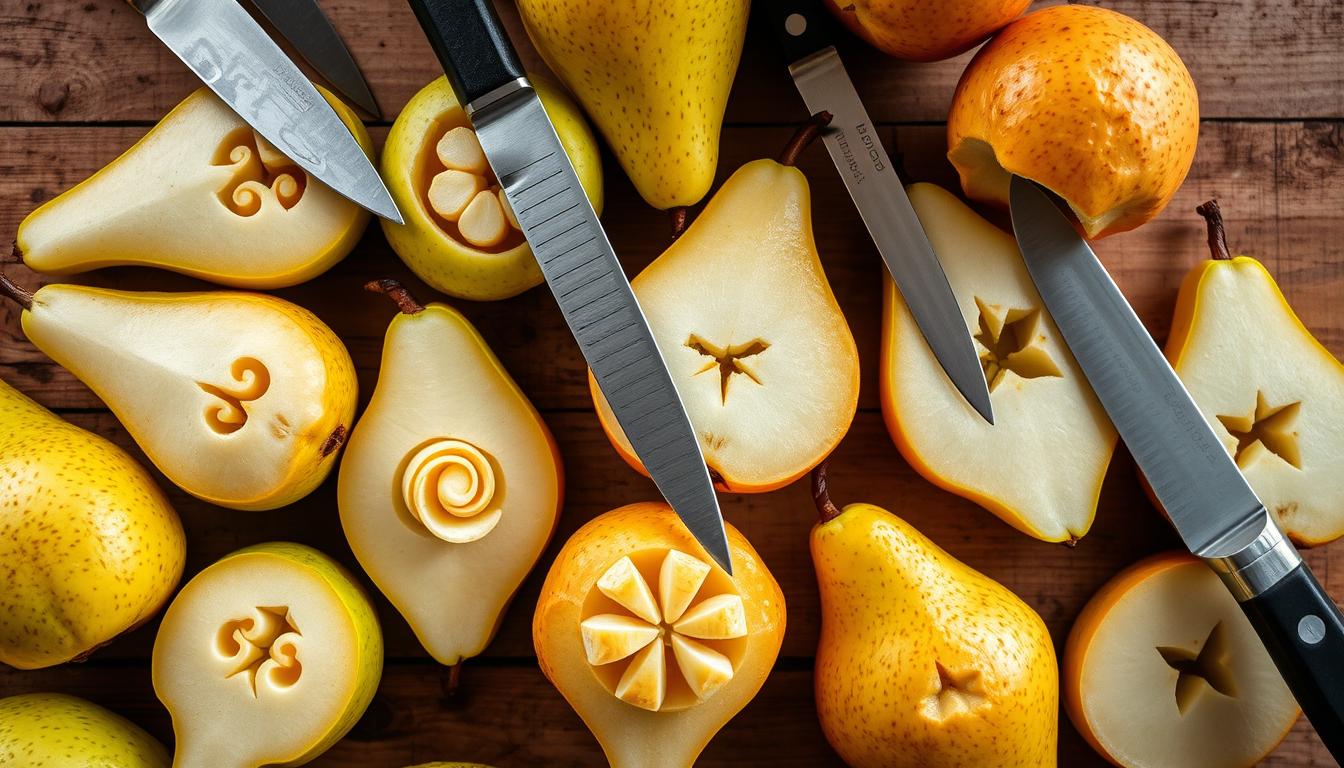
Fancy Pear Shapes
Making elegant pear fans is simpler than you think. Here’s how to do it:
- Wash the pear thoroughly.
- Cut the pear vertically in half.
- Remove the core using a melon baller.
- Place the half cut-side down.
- Make thin vertical slices without cutting through the base.
- Gently fan out the slices.
Pears for Salads and Cheese Boards
Preparing pears for salads requires care. Choose ripe but firm pears and follow these steps:
- Wash the pear completely.
- Cut in half from top to bottom.
- Remove seeds with a spoon.
- Slice vertically into thin pieces, approximately 1/8 inch thick.
- Pro tip: Toss slices in lemon juice to prevent browning.
Pears for Desserts
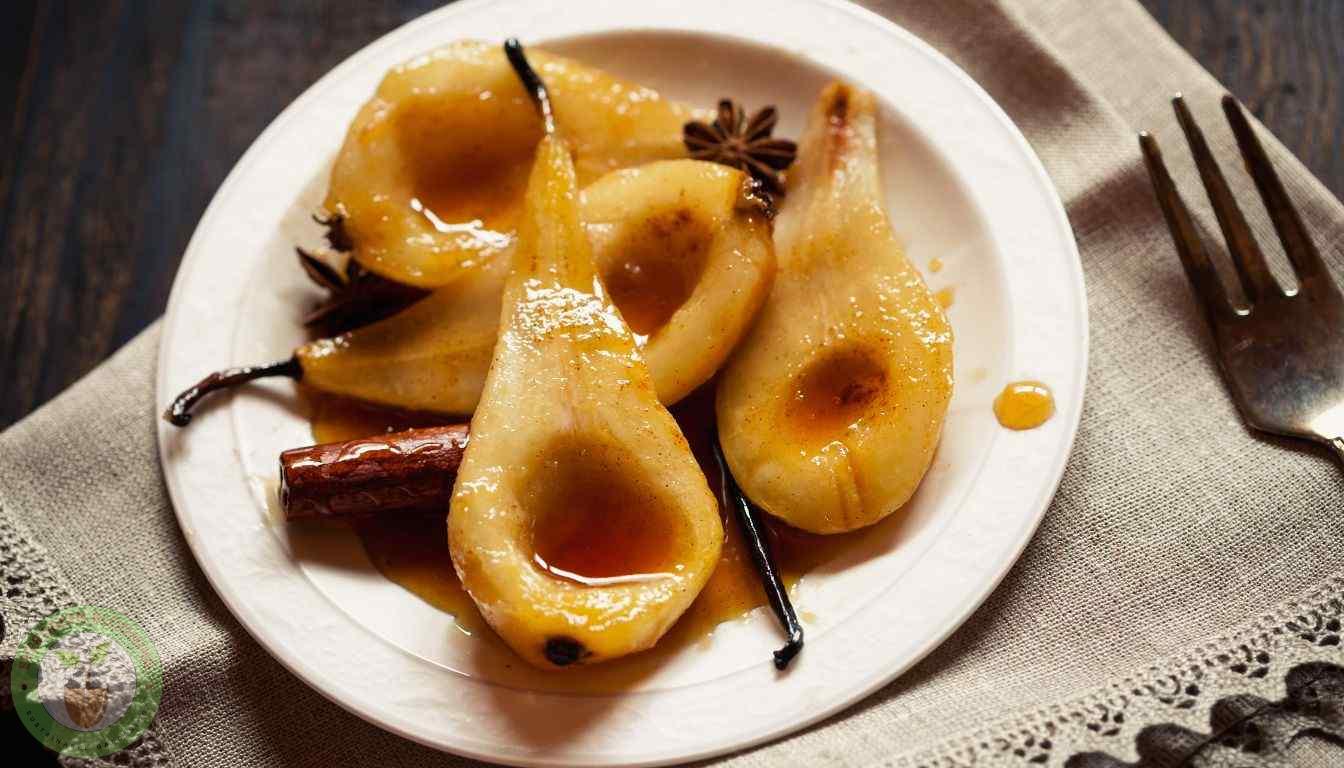
Desserts can be stunning with the proper pear cut. For poached pear halves or tart slices, peel and remove the core. Slice thinly and arrange in circular patterns for an elegant look.
The secret to beautiful pear presentations is precision and creativity!
With these techniques and tips, you’ll turn simple fruit into stunning culinary art. It will delight both your eyes and taste buds.
Storing Cut Pears
After you’ve cut your pears, it’s important to store them correctly. This keeps them fresh and tasty. Here are some tips to help you keep those slices delicious and avoid waste.
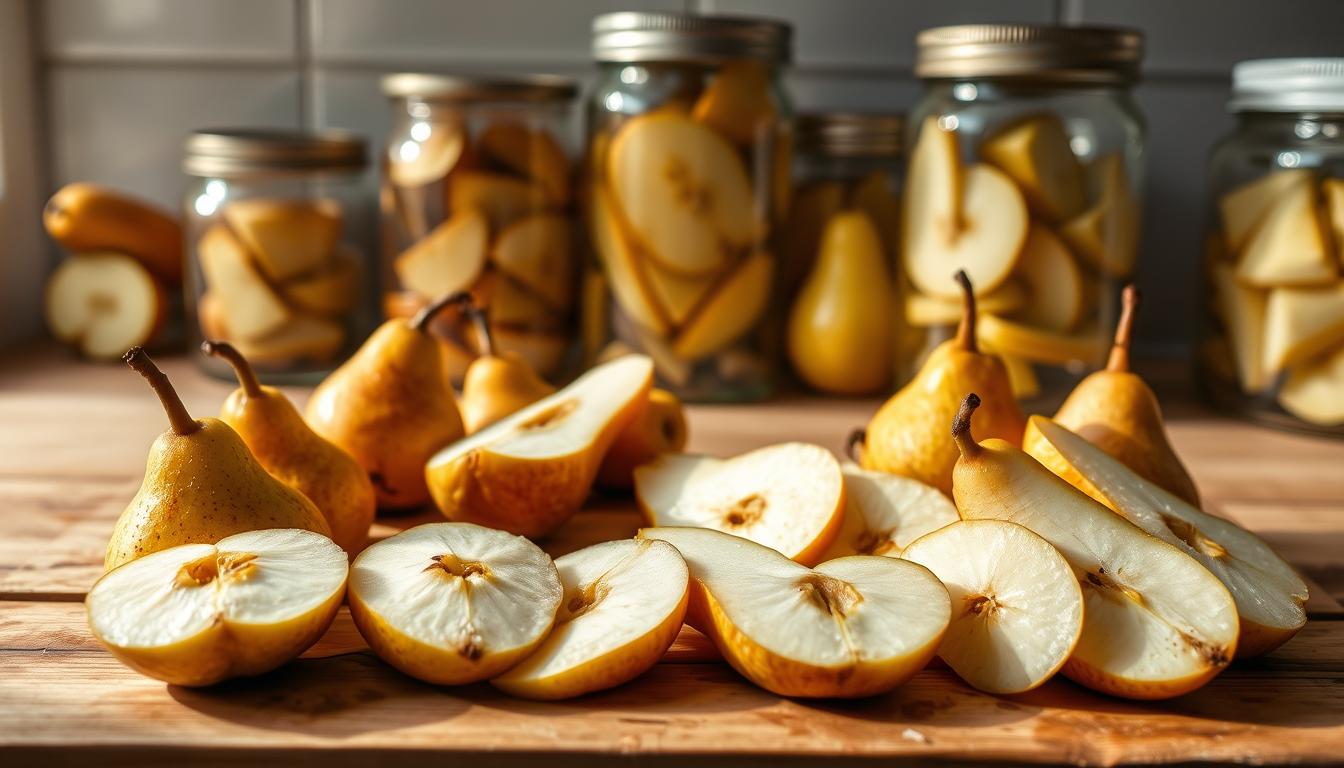
Keeping Pears Fresh
Fresh-cut pears require special care to remain fresh. Here are some ways to keep them fresh longer:
- Refrigerate them right after cutting.
- Put them in airtight containers.
- Keep air away from them.
Preventing Browning
Preventing pears from turning brown can be a challenge. Here are some tips to help:
- Drizzle lemon juice on the cut parts.
- Try the ascorbic acid solution.
- Store them with citrus fruits.
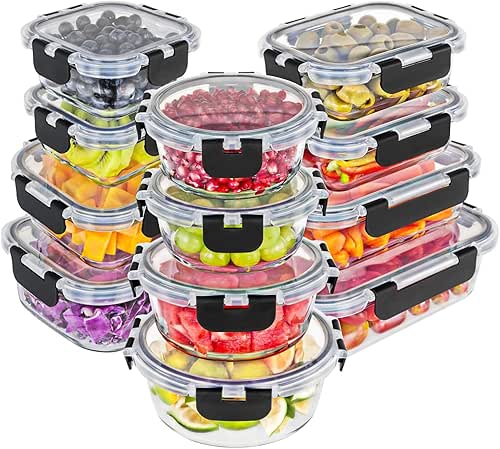
Best Storage Containers
The correct container is key to keeping your pears fresh and tasty.
| Container Type | Preservation Duration | Recommended Use |
|---|---|---|
| Glass containers | 3-4 days | Best for short-term storage |
| Plastic food storage | 2-3 days | Good for meal prep |
| Vacuum-sealed bags | 5-7 days | Extended freshness |
Pro tip: Always label your containers with the date of cutting to track freshness!
Pear-Cutting Tips and Tricks
Mastering kitchen knife skills is key when cutting a pear. I’ve honed my technique over the years. Now, I’m eager to share tips that will change how you prepare pears.
Quick Tips for Efficient Cutting
Cutting pears doesn’t have to be hard. Here are my best tips for easy pear preparation:
- Always use a sharp chef’s knife for clean, precise cuts.
- Choose a stable cutting board with a non-slip surface.
- Rinse the pear thoroughly before cutting.
- Position your knife at a comfortable angle.
Common Mistakes to Avoid
When cutting pears, avoid these common mistakes:
- Using a dull knife that crushes instead of slicing.
- Cutting on an unstable or slippery surface.
- Applying too much pressure while cutting.
- Neglecting to wash the pear before preparation.
Personal Hacks I’ve Found Helpful
“Sharp knife, steady hand – the secret to perfect pear cutting!” – Gary, Professional Chef
Here are some unique tricks I’ve developed over the years of working with pears:
- Chill the pear slightly before cutting for a firmer texture,
- Use a serrated knife for extra grip on ripe pears,
- Practice consistent knife pressure for uniform slices,
Remember, learning to cut a pear takes practice. Don’t worry if you’re not perfect at first!
Frequently Asked Questions (FAQs): How to Cut a Pear
How do I know if a pear is ripe?
What’s the best knife to use for cutting pears?
How can I prevent cut pears from turning brown?
Can I eat pear skin?
How long can I store cut pears?
What are the best pear varieties for cutting?
Do I need to remove the seeds when cutting a pear?
Final Thoughts: Enjoy Your Pear!
Learning how to prepare pears is more than just a skill—it’s an art. It’s about turning a simple fruit into something amazing. Through my journey, I’ve learned that being precise and creative can make even the simplest pear a culinary masterpiece.



You now know how to pick, prepare, and cut pears like a pro. These skills are great for making beautiful salads or delicious desserts. The most important thing is to keep practicing and believe in yourself. Every slice is an opportunity to improve.
Exploring Pear Possibilities
Try out different recipes to show off your pear-cutting skills. Create a classic pear and Gorgonzola salad, a rustic galette, or enjoy sliced pears with honey. The possibilities are endless, limited only by your creativity.
Your Pear Preparation Journey
Every chef began where you are now, learning and honing their skills. Enjoy the journey, savor the delicious outcomes, and most importantly, have fun exploring the world of pears!
Further Recommendations:
- Winterproofing the Garden
- A Beginner’s Guide to Growing Lettuce
- Exciting Edible Mushrooms
- Homesteading
- Beginner’s Guide to Growing Tomatoes
- The ultimate guide to growing Serrano Peppers in pots
- Ultimate Guide to Strawberries
- Discover the World of Peppers
- What are Heirloom Strawberries
- What not to plant with strawberries
- When to transplant strawberries
- Best Organic Fertilizers for Strawberries
- What is a Strawberry Tree?
- Stylish Gardening Arm Sleeves for Gardening
- What animals eat strawberries
- Do strawberries grow on trees?
- Best Outdoor Composting Bins
- Ultimate Guide to Kiwi Fruit
- Understanding Mushrooms
- How much cold can strawberries tolerate?
Video: How to Cut a Pear Into Slices
Reference Links
- Summer and Fall Pear Grades and Standards – USDA
- Pears – UMD
- Pruning Apples and Pears in Home Fruit Plantings – PSU
- Growing pears in the home garden – UMN
- Pear Rust – OSU

Leave a Reply