
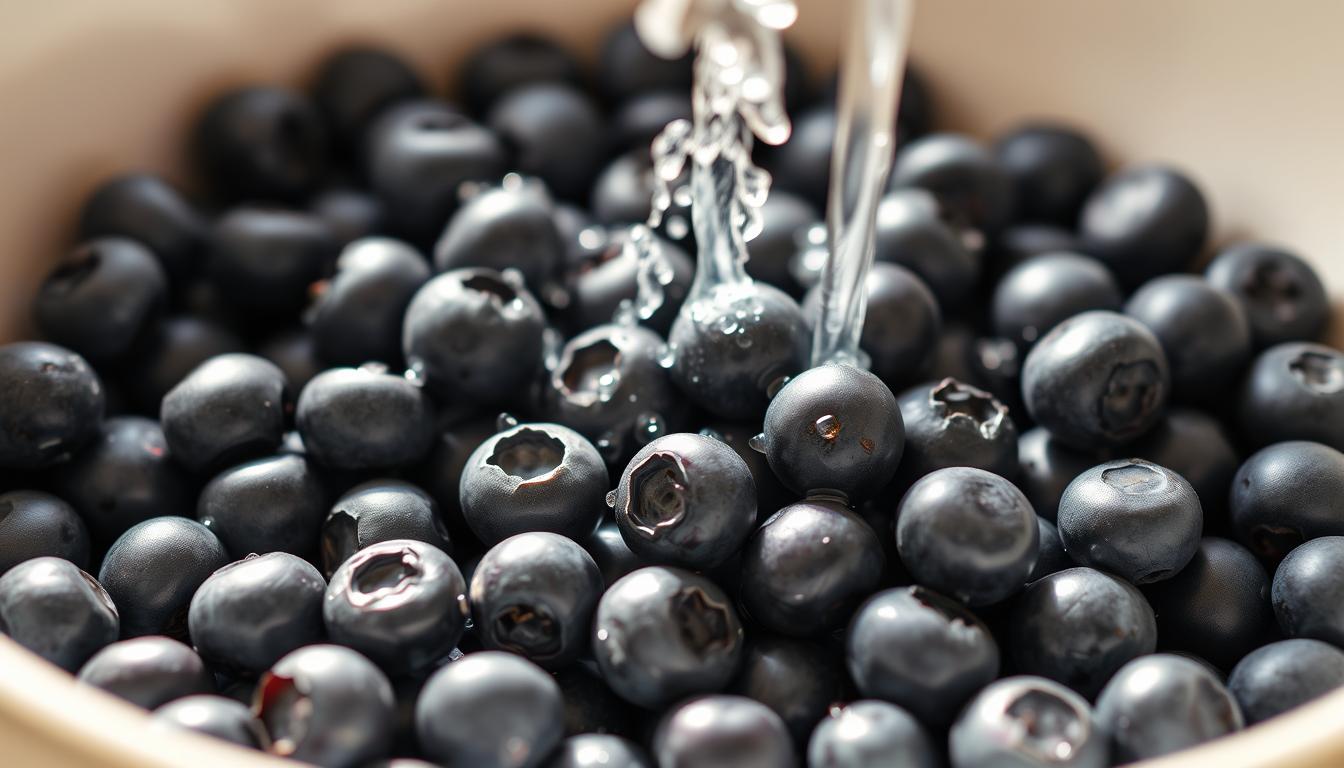
Ever thought about whether washing blueberries is really needed? Or could it even harm them? In this guide, I explore the best methods for washing fresh blueberries. This makes them clean, safe, and ready to eat.
Learning how to wash blueberries improves their taste and keeps them fresh longer. With just a few easy steps, I can savor these small yet powerful fruits to the fullest!
Key Takeaways
- Washing blueberries removes pesticides and dirt.
- Always wash blueberries before eating them.
- A colander is the best tool for rinsing.
- Cold water is ideal for washing blueberries.
- Soaking may not always be necessary.
- Proper drying extends the freshness of your blueberries.
Why Washing Blueberries is Important
Washing blueberries is key to my health and the fruit’s quality. Blueberries often have pesticide residues and dirt. Therefore, thorough cleaning is crucial to ensure the safety of blueberry products.
Removing Pesticides and Dirt
When I clean blueberries, I aim to remove pesticides and dirt. These can be harmful, especially if eaten raw. A cold water rinse helps remove most of this, making them safer.
Preserving Freshness and Flavor
Washing also keeps blueberries fresh and tasty. Rinsing removes dirt but leaves the waxy bloom intact. This wax seals in moisture, preventing mold and improving taste.




How Often Should I Wash Blueberries?
Knowing when to wash blueberries is key to keeping them fresh. The timing of washing affects their taste and shelf life. It’s important to know when to clean them so they’re at their best.
Before Eating vs. After Buying
I wash blueberries just before eating them or using them in a recipe. Washing them too early can make them spoil faster. Waiting until I’m ready to use them keeps them fresh and tasty.
Impact on Shelf Life
Washing blueberries can change how long they last. Unwashed ones can stay fresh for two weeks in the fridge. But washed ones usually last only one to three days. I wash them just before eating to ensure they’re always fresh and delicious.
Best Tools for Washing Blueberries
Choosing the right tools for washing blueberries is crucial. The best tools help keep the berries fresh and intact. I’ve found a couple of tools that stand out for their effectiveness and ease of use.
Colander Versus Bowl
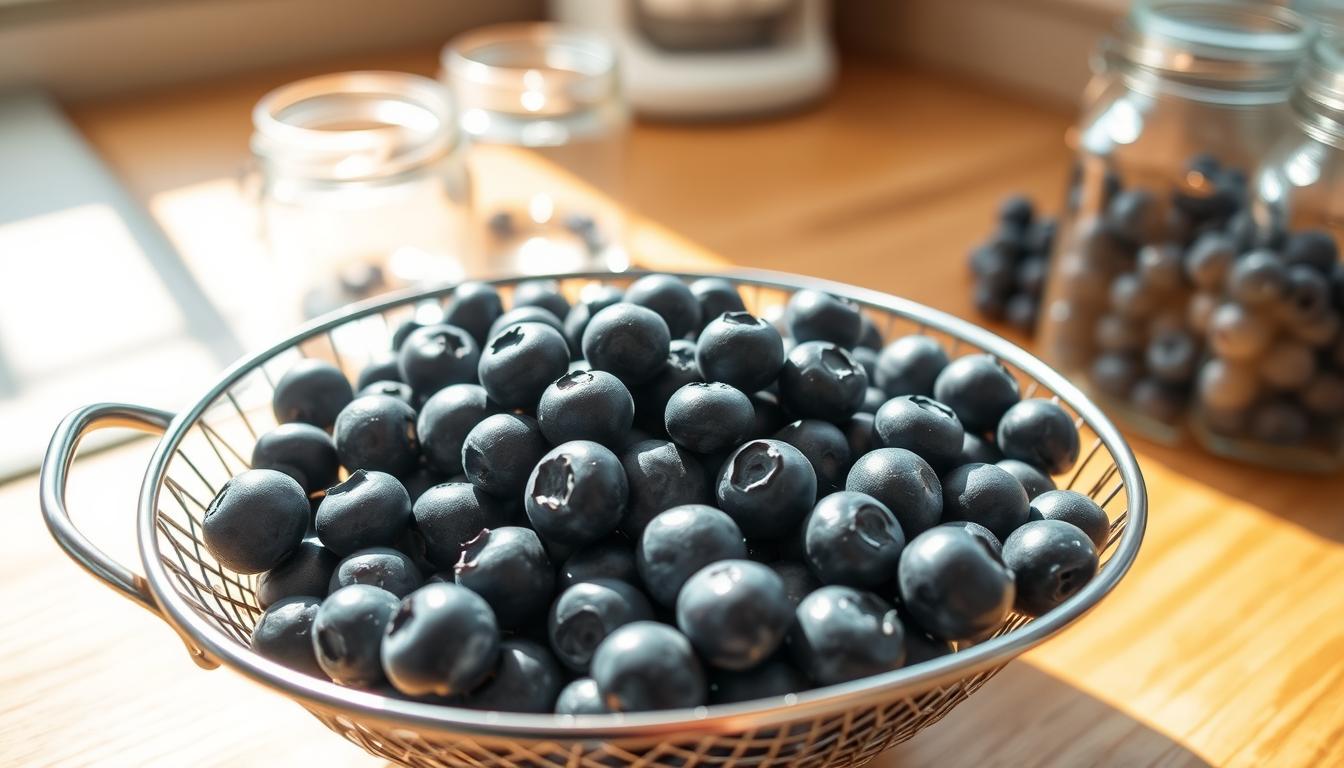
A colander for blueberries is my top choice. It allows water to flow freely and thoroughly rinses each berry without crushing it. The small holes keep berries from falling out when I shake them gently.
At times, I use a bowl filled with cold water instead. This method gently loosens dirt without harming the berries’ delicate skin.

Using a Gently Running Tap
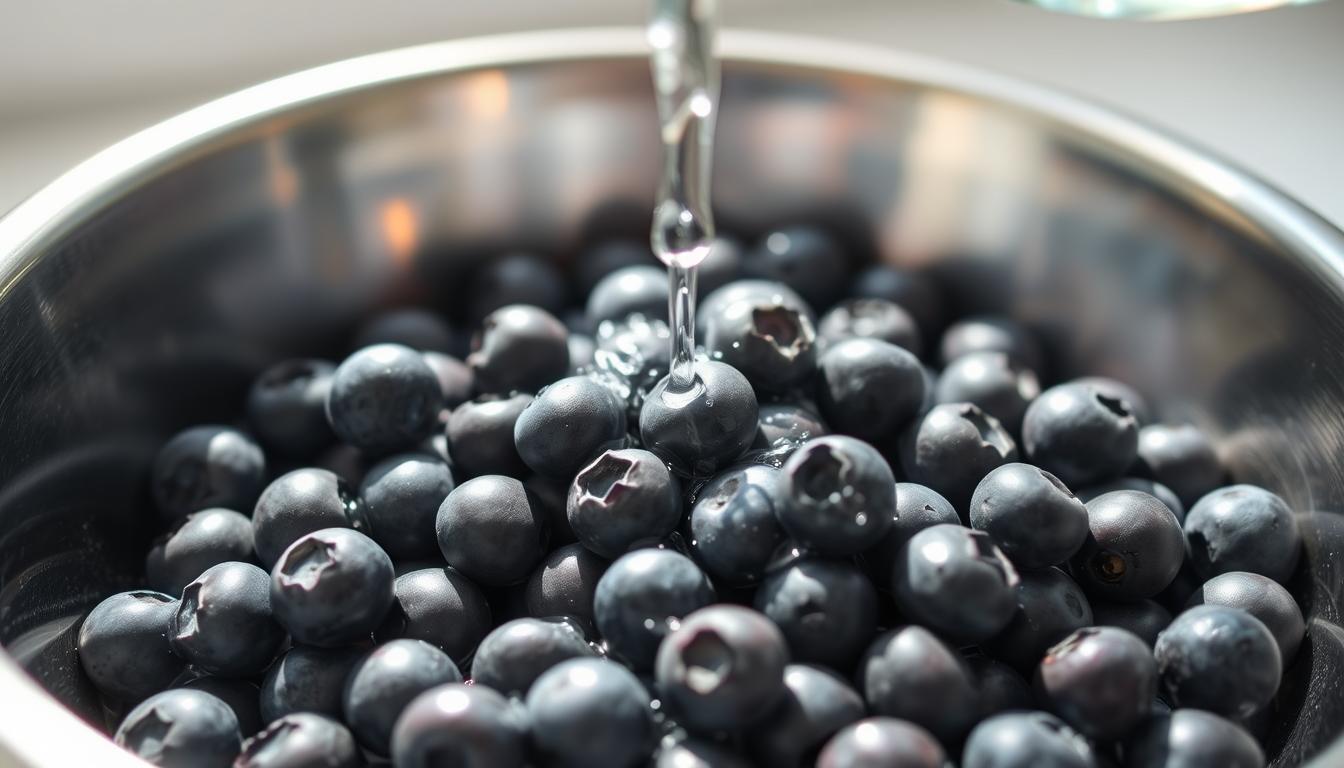
Using a gently running tap is key to rinsing blueberries. It removes dirt effectively. I place the colander under the tap and let the water flow slowly over the berries.
It’s important to keep the water flowing gently to avoid bruising the berries. This way, the berries stay fresh and taste even better.
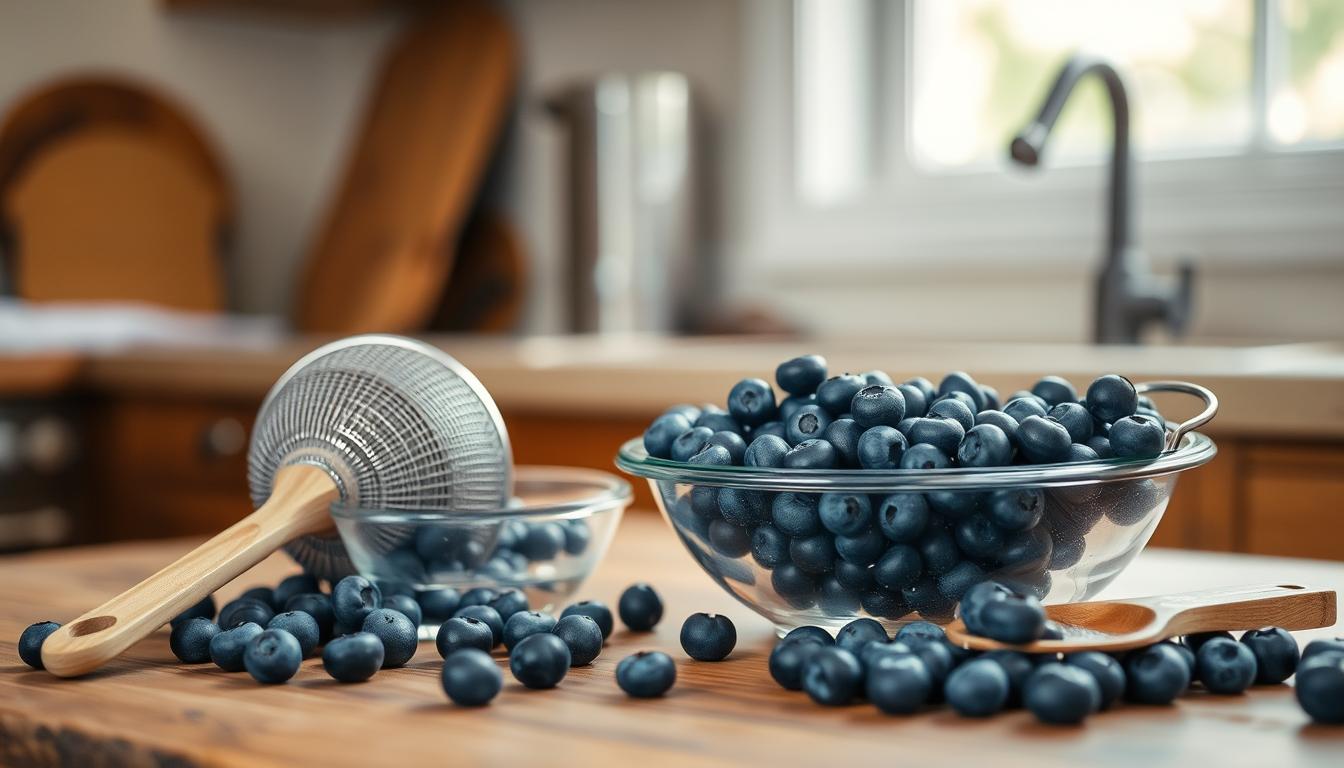
Step-by-Step Guide to Washing Blueberries
Washing blueberries properly is key to enjoying them thoroughly. I use a simple method that cleans them well without damaging them. This way, I eliminate dirt and improve both safety and taste.
Rinse Under Cold Water
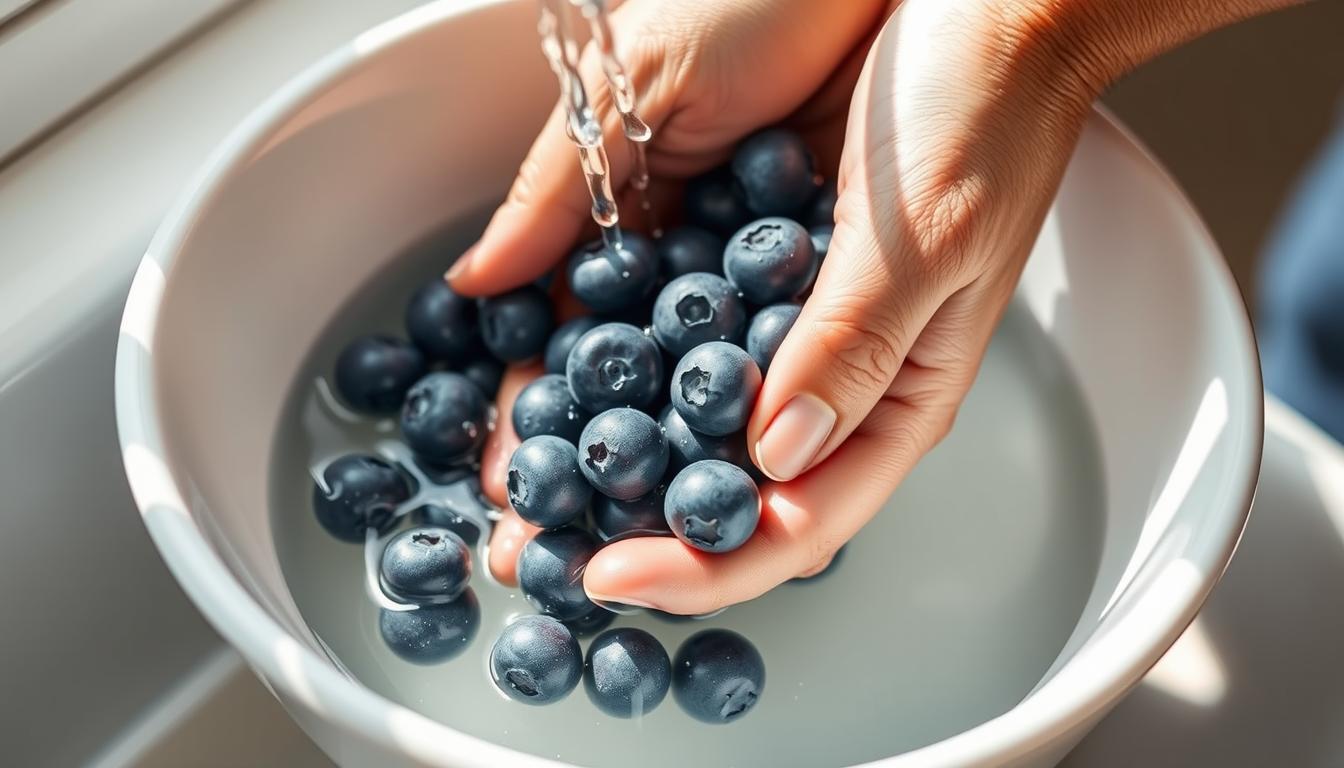
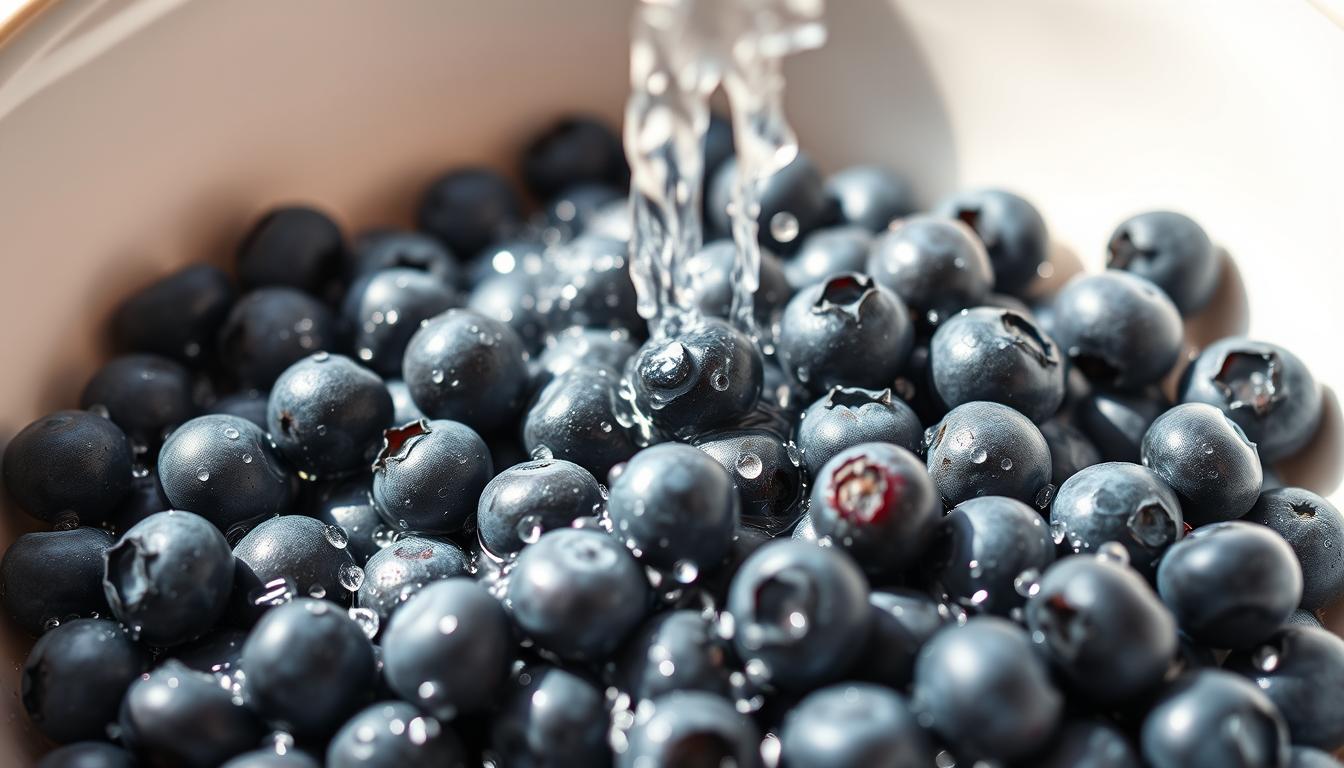
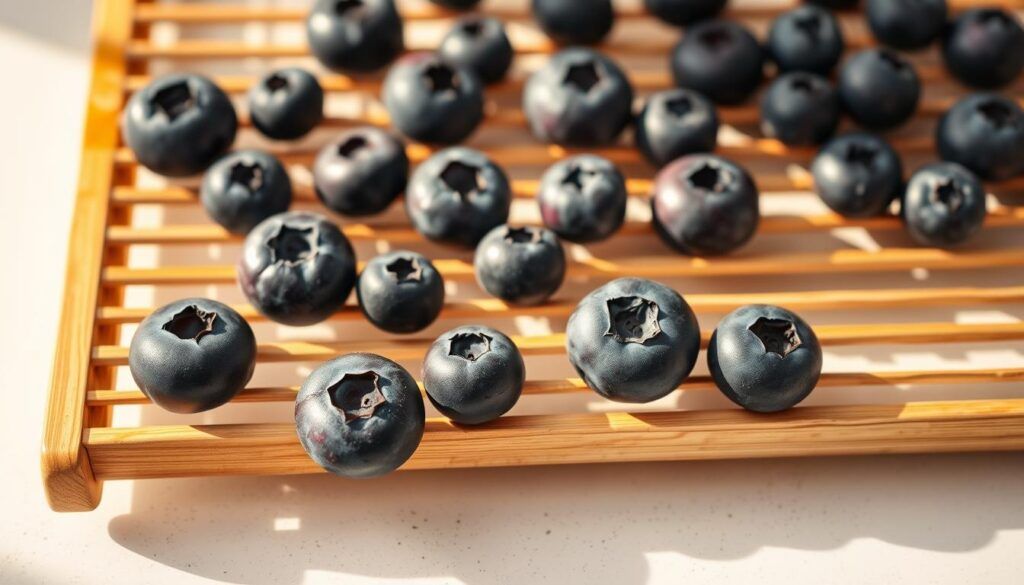
I start by putting the blueberries in a colander and rinsing them with cold water. This step is crucial for washing off surface dirt. The cool water also keeps the berries fresh, making them taste better.
Gently Shake or Stir
Next, I shake or stir the blueberries gently in the colander. This ensures all sides are cleaned. Using these methods ensures the berries are clean and safe to eat, without losing their texture or flavor.
Should I Soak Blueberries Before Washing?
Soaking blueberries is a common practice, but it has its pros and cons. It can help ensure your berries are clean by using vinegar or salt. However, it’s essential to soak them for the correct amount of time to maintain their texture.
Pros and Cons of Soaking
Soaking blueberries has several benefits:
- Thorough cleaning – It helps remove dirt and chemicals.
- Bacterial reduction – Vinegar can help reduce bacterial growth.
- Extended freshness – It can prolong the shelf life of berries.
But, there are also downsides:
- Flavor absorption – Long soaking can alter the taste of berries.
- Texture alteration – Soaking too long can make berries mushy.
Recommended Soaking Time
The best soaking time for blueberries is short. I suggest soaking them for one to five minutes. This time is enough to clean them without making them mushy. Always rinse them thoroughly after soaking to remove any remaining solution.
How to Dry Blueberries Post-Wash
After washing blueberries, it’s key to dry them well. This keeps them fresh and stops mold from growing. I’ve found that using the right drying methods makes a big difference. Here are a few ways I dry blueberries effectively.
Air Drying Techniques
One good way to dry blueberries is to air-dry them. I put the washed berries in a colander and let them sit for a bit. This enables the water to drain off naturally. Sometimes, I gently shake the colander to help.
Air drying is a simple and effective method. It removes moisture without harming the berries.
Using Paper Towels
For a quicker method, I use paper towels. I lay the rinsed blueberries on a clean paper towel and cover them with another paper towel. This method is gentle yet effective in removing moisture. It keeps the berries clean and ready for storage without getting wet.
Can I Use Soap or Vinegar to Wash Blueberries?
When I think about washing blueberries, choosing the correct method is key. Some people use soap or commercial washes, but these can change the fruit’s taste and texture. Vinegar wash is a better choice for keeping blueberries fresh and safe.
The Soap Debate
Using soap on blueberries can be a problem. Soaps have harsh chemicals that can stick to the fruit, even after rinsing. This can make the blueberries taste different and may not clean them as well as I would like. Rinsing them under water is usually enough, but vinegar can help kill bacteria.
Vinegar Solution Benefits
A vinegar wash, made from one part vinegar to three parts water, is great for killing bacteria. After soaking the blueberries in it for a few minutes, I rinse them well under cold water. This method keeps my blueberries fresh and safe to eat.
Storing Fresh Blueberries After Washing
After washing blueberries, it’s key to store them properly to keep them fresh. Storing them well can make them last longer. Here are some tips to keep your blueberries fresh for recipes or snacks.

Ideal Storage Conditions
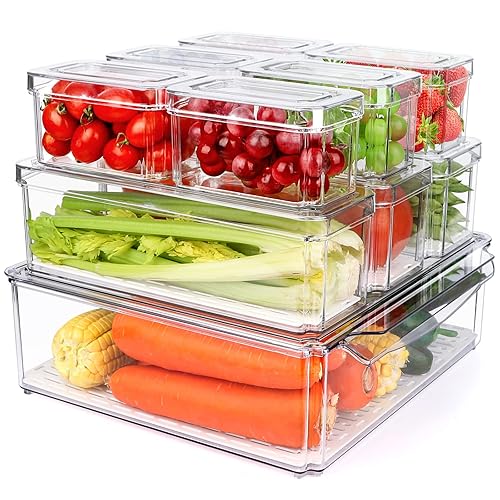
For optimal results, store washed blueberries in containers that allow for airflow. Please store them in the coldest part of your refrigerator at around 32°F. Use an airtight container lined with paper towels to absorb moisture.
How to Keep Them Fresh Longer
To enjoy blueberries for days, eat them within one to three days of washing and refrigerating them. Check them regularly for signs of spoilage, such as mushy spots or mold. If you find any, throw them away to keep the rest fresh.
Common Mistakes When Washing Blueberries
Washing blueberries might seem simple, but many people make mistakes. These errors can ruin the taste and freshness of the fruit. Knowing these mistakes can make a big difference in your blueberry experience.
Washing Too Early
One big mistake is washing blueberries as soon as you get them. This can shorten their life. Berries need to dry before washing to prevent mold growth.
It’s better to wait until you’re ready to eat them. This way, you can enjoy them for longer.
Using Hot Water
Rinsing blueberries with hot water is another mistake. Hot water can hurt the berries’ skin. This affects their texture and taste.
Always use cool or cold water to keep the berries fresh. Taking care of your blueberries ensures they stay delicious.
Knowing these common mistakes can make a big difference. Washing blueberries at the right time and with the right water ensures a tasty snack for you and your family.
Creative Ways to Use Washed Blueberries
Washed blueberries open up a world of possibilities in the kitchen. I enjoy experimenting with new ways to incorporate them into my meals and snacks. Their bright color and sweet taste make them a great addition to many dishes.
Adding to Smoothies
One of my top picks is adding them to blueberry smoothie recipes. Their natural sweetness blends well with other fruits, making a refreshing drink. Blend them with bananas, spinach, or yogurt for a healthy treat. You can also mix them with almond milk and a bit of honey for an extra flavor boost.
Topping on Yogurt
Blueberries are also great as a topping. They add color, essential vitamins, and antioxidants to yogurt. I often top them with Greek yogurt and add some granola for extra crunch. This makes for a tasty and nutritious breakfast or snack that keeps me going all day.
Health Benefits of Blueberries
Blueberries are not only tasty but also super good for you. They are full of vitamins, antioxidants, and fiber. Recognizing the nutritional value of blueberries helps us appreciate their importance in a healthy diet.
Nutritional Highlights
One serving of blueberries is low in calories but rich in nutrients. They have vitamin C, vitamin K, and B vitamins. These help keep us healthy. Blueberries also contain antioxidants that are beneficial for the heart and fiber that supports better digestion.
Why They’re a Great Snack
It’s easy and fun to add blueberries to my day. I can mix them into smoothies or eat them straight. They curb my hunger without the extra calories of junk snacks. Blueberries also boost brain function and skin health. So, when I snack on blueberries, I’m treating my taste buds and body well.
Frequently Asked Questions(FAQs): How to Wash Blueberries
How do I wash blueberries effectively?
Why is it important to wash blueberries?
Can I soak blueberries before washing them?
Should I wash blueberries right after buying them?
How long can washed blueberries last?
What’s the best way to dry blueberries after washing?
Is it safe to use soap or commercial produce washes on blueberries?
How should I store washed blueberries?
What are the common mistakes people make when washing blueberries?
How can I use washed blueberries in my meals?
Final Thoughts on Washing Blueberries
Washing blueberries correctly is key to enjoying them safely and thoroughly. In my guide, I suggest making washing a part of your daily routine. This not only makes them cleaner but also brings out their best taste.
One top tip is to rinse them under cold water. This removes dirt while preserving their natural flavor. It’s easy to get others to eat more fruits with these simple steps. Fresh blueberries add a nutritious boost to our diets.






Learning to wash blueberries well can change how we eat fruits. Let’s make fresh fruits a big part of our diet, starting with one clean blueberry at a time!
Further Recommendations:
- Winterproofing the Garden
- A Beginner’s Guide to Growing Lettuce
- Exciting Edible Mushrooms
- Homesteading
- Beginner’s Guide to Growing Tomatoes
- The ultimate guide to growing Serrano Peppers in pots
- Ultimate Guide to Strawberries
- Discover the World of Peppers
- What are Heirloom Strawberries
- What not to plant with strawberries
- When to transplant strawberries
- Best Organic Fertilizers for Strawberries
- What is a Strawberry Tree?
- Stylish Gardening Arm Sleeves for Gardening
- What animals eat strawberries
- Do strawberries grow on trees?
- Best Outdoor Composting Bins
- Ultimate Guide to Kiwi Fruit
- Understanding Mushrooms
- How much cold can strawberries tolerate?
Video: How to Clean and Store Blueberries
Reference Links
- Blueberries and Health – USDA ARS
- Four Ways to Preserve Blueberries – UAEX
- Breeding Better Blueberries – ARS




Leave a Reply