
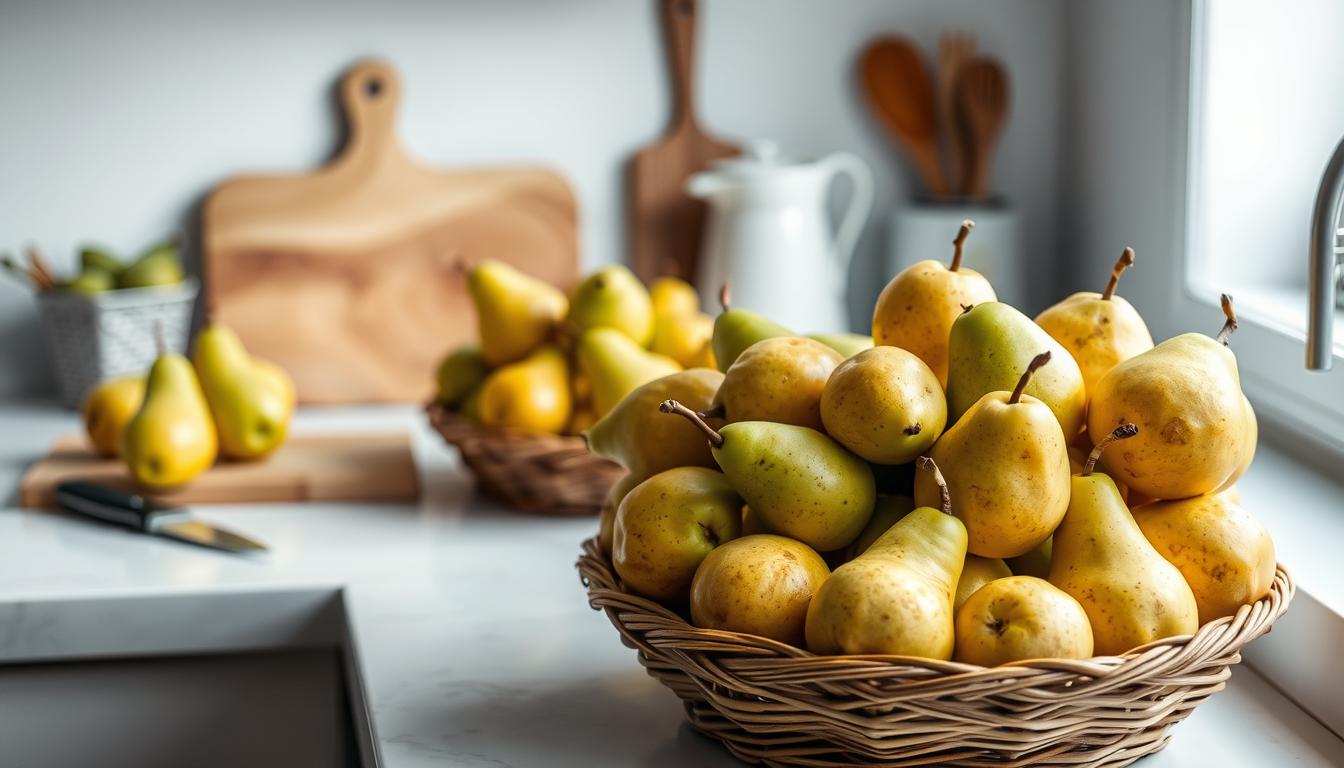
Have you ever wondered why your pears turn mushy or mealy before you can enjoy them? Storing pears isn’t as simple as it seems. Learning how to store pears can make a big difference in your fruit experience.
As someone who loves fruits, I’ve found that storing pears is a special task. Unlike other fruits, pears ripen from the inside out. My tips will help you keep their texture and flavor perfect, so you enjoy every fruit.
In this guide, I’ll share some expert advice on storing pears. You’ll learn secrets to keep your fruit fresh, tasty, and ready to eat. These strategies will change how you preserve pears, whether you cook at home or love fruits.
Key Takeaways
- Pears ripen differently from other fruits.
- Temperature plays a crucial role in storing pears.
- Ripeness determines the best storage method.
- Avoid storing pears with ethylene-producing fruits.
- Check pears regularly for optimal freshness.
Understanding Pear Ripeness
Learning how to ripen pears is essential for enjoying their full flavor. Pears ripen best after they’re picked. This makes keeping them fresh an art.
Pears taste and feel their best when they ripen off the tree. Unlike many fruits, pears get better after they’re picked. This makes them unique in the world of fresh produce and meals.
Product offers are temporarily unavailable.
How to Tell When Pears Are Ripe
The secret to perfect pear ripeness is the “neck test”. Here’s how to do it:
- Gently press the neck of the pear near the stem.
- If it yields slightly to pressure, the pear is ripe.
- A completely soft neck means the pear is ready to eat.
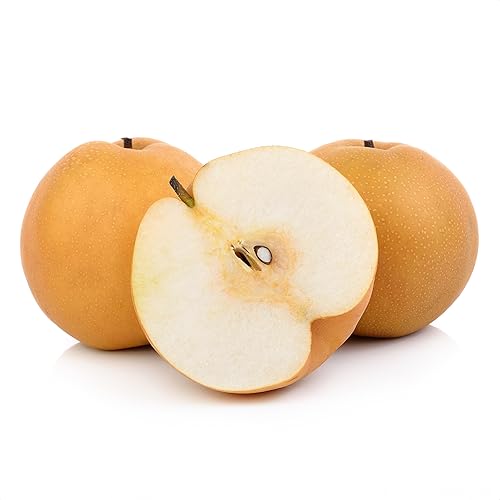
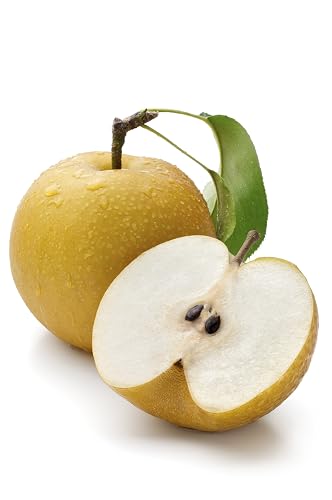
Different Varieties of Pears
Not all pears ripen the same way. Each variety has its own traits:
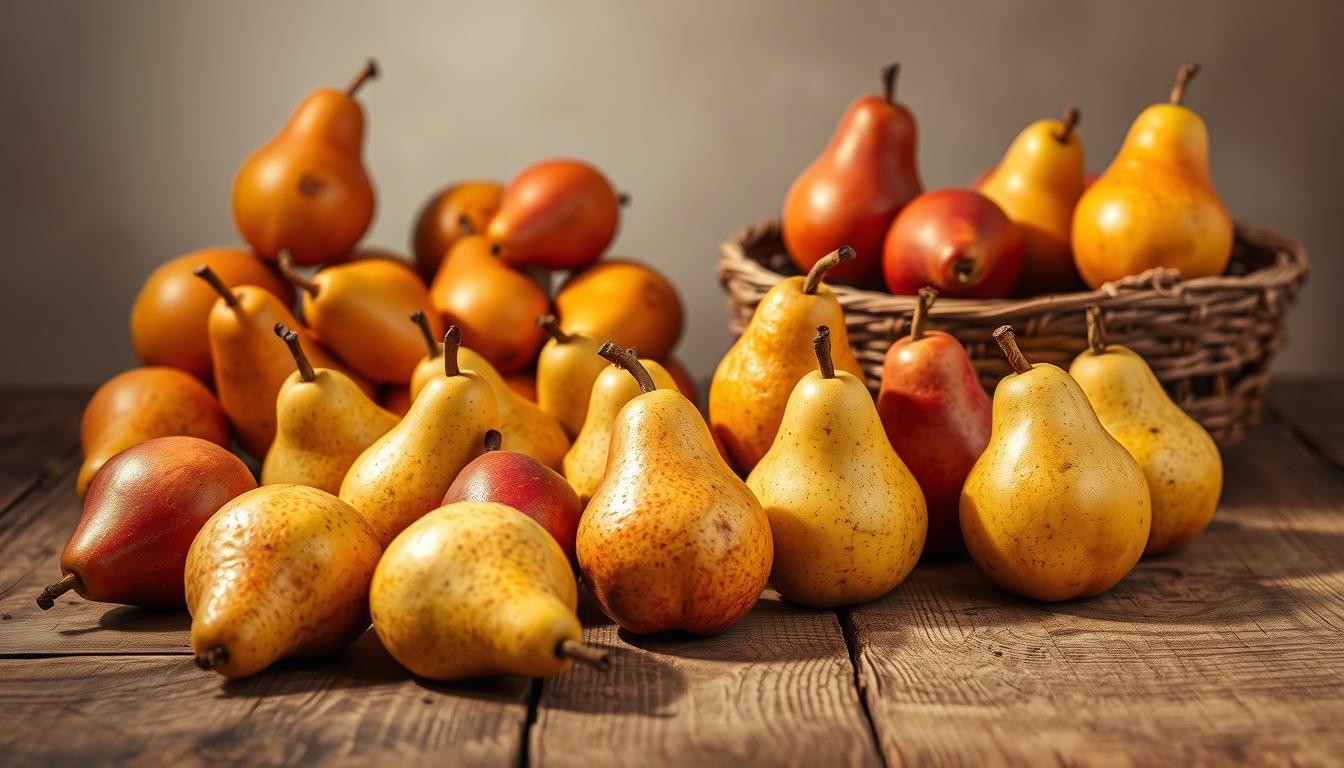
- Bartlett Pears: Change color from green to yellow as they ripen.
- Bosc Pears: Remain firm and bronze-colored when ripe.
- Anjou Pears: Stay green even when fully ripe.




Ideal Ripeness for Storage
To keep pears fresh, pick them when they’re slightly underripe. Store them at room temperature to let them ripen slowly. Once ripe, refrigerate to slow down the ripening process and keep them fresh for a longer period.
The Best Ways to Store Pears
Storing pears correctly can greatly extend their shelf life. The best method depends on the fruit’s ripeness and your needs.
Room Temperature vs. Refrigeration
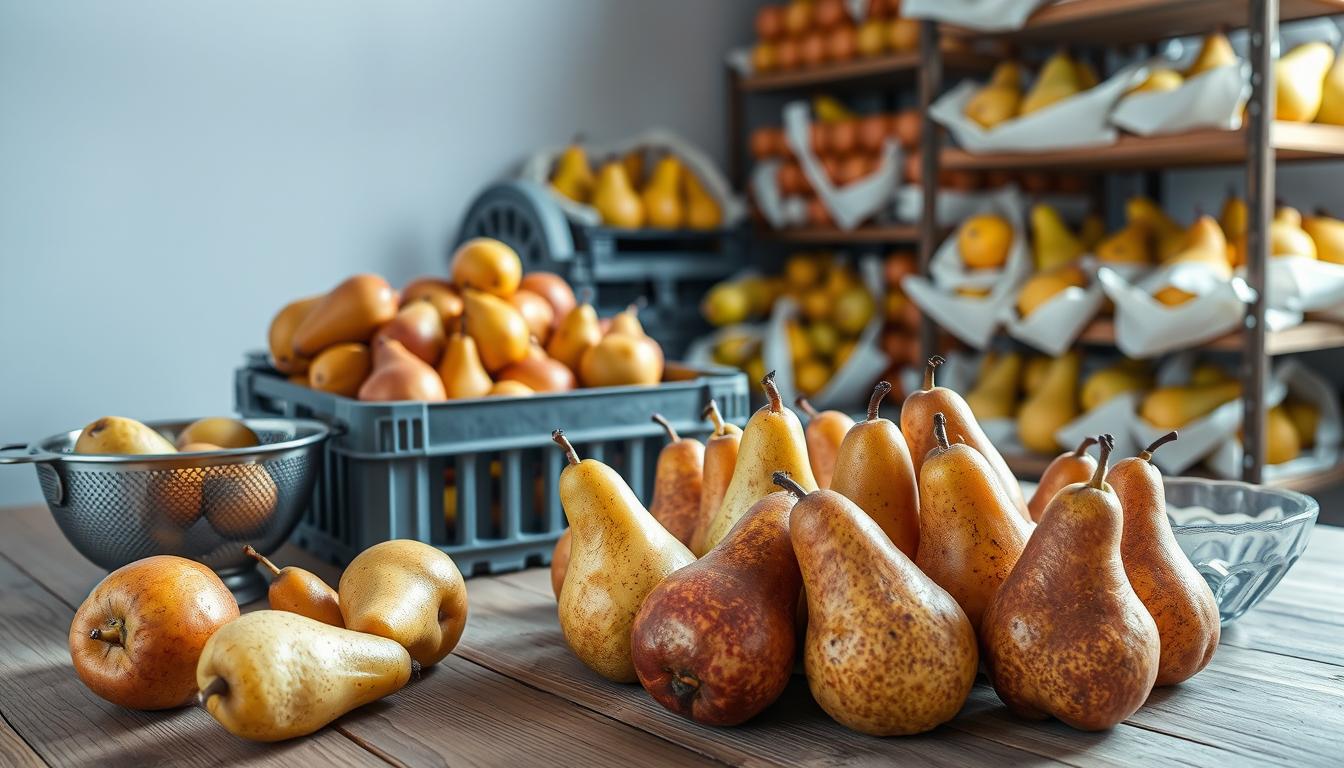
Understanding temperature is crucial for storing pears. Unripe pears should sit at room temperature to ripen naturally. Once ripe, refrigerate them to slow down the ripening process.
- Unripe pears: Store at room temperature.
- Ripe pears: Refrigerate at 35-45 degrees Fahrenheit.
- Ideal storage location: Cool, dark place away from direct sunlight.
Using Paper Bags for Ripening
Want to ripen pears faster? Use paper bags. Place unripe pears in a bag with a ripe banana or apple. These fruits release ethylene gas, which speeds up their ripening.
Storing Cut Pears
After cutting a pear, it’s important to prevent browning. Here are my top tips:
- Coat cut surfaces with lemon juice.
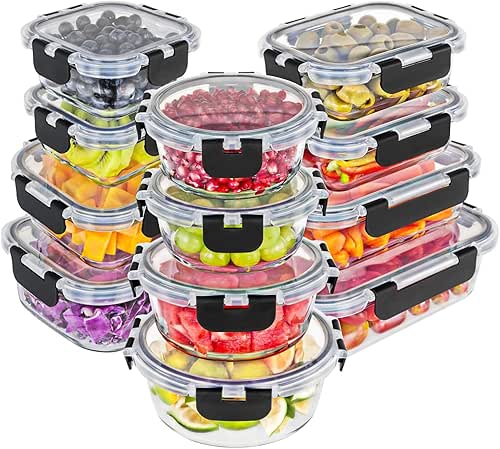
- Store in an airtight container.
- Refrigerate immediately.
- Consume within 3-4 days.
Pro tip: Always check your pears regularly to ensure optimal freshness and prevent spoilage.
Tips for Long-Term Storage
Discovering ways to keep pears fresh longer can make them last beyond their usual season. To keep your pears tasty for months, use smart storage tips.
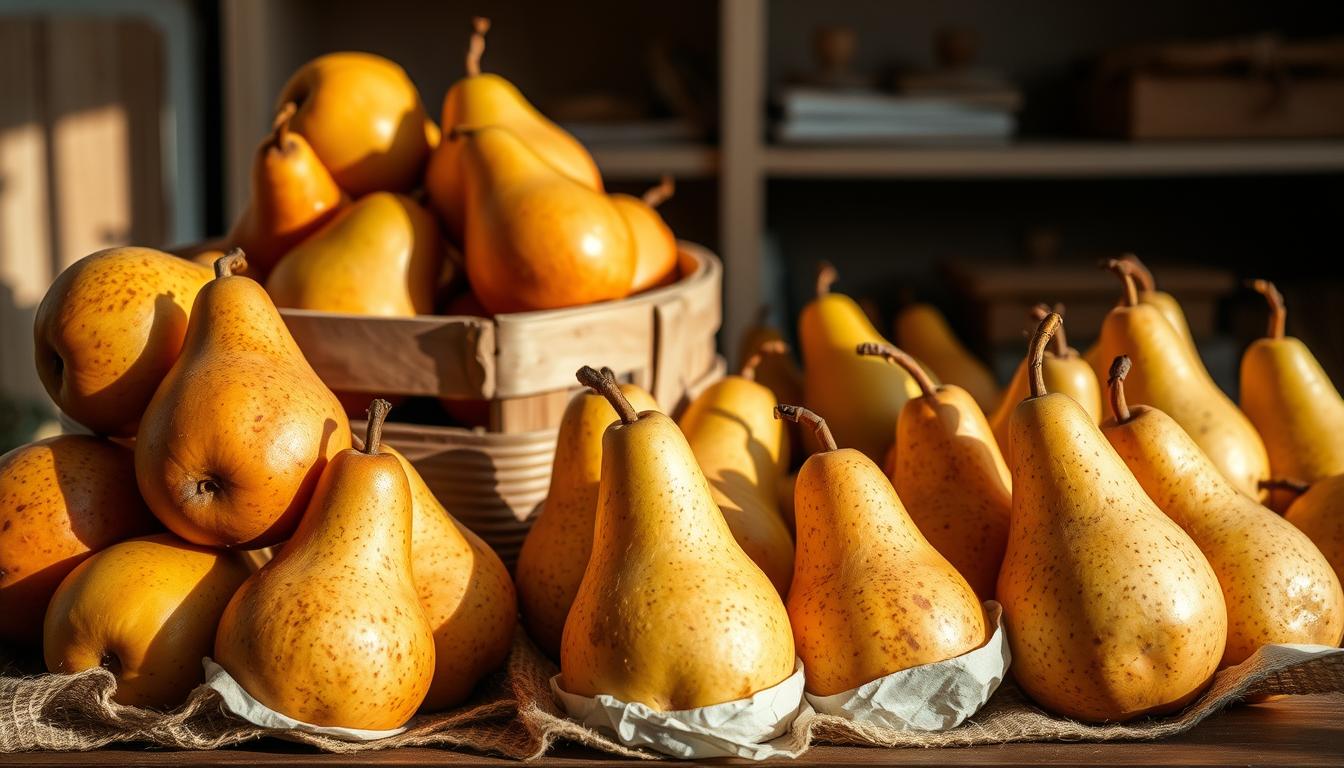
Having lots of pears? There are many ways to keep them fresh and tasty. Let’s explore some top strategies for storing fruit for extended periods.
Freezing Pears Safely
Freezing is a great way to preserve pears for later use. Here’s how to do it:
- Select ripe but firm pears.
- Wash and peel the pears carefully.
- Remove the core and slice into even pieces.
- Prevent browning by brushing with lemon water.
- Pack slices in airtight freezer bags.
Canning Pears for Preservation
Canning is another effective method for storing pears for an extended period. You’ll need clean jars, fresh pears, and a simple syrup.
Pro tip: Choose slightly underripe pears for canning to maintain their texture.

Dehydrating Pears
Dehydrating turns pears into tasty, long-lasting snacks. Use a dehydrator or oven to make crispy pear chips. Cut the pears into thin slices and dry them at a low temperature until they are crispy.
Remember, proper preparation is key to preserving your pears’ amazing flavor and nutritional value!

Common Mistakes to Avoid
Storing pears might seem simple, but many common mistakes can ruin your fruit’s quality. Knowing the right way to store pears can greatly improve their taste and texture.
I’ve learned that storing pears correctly requires attention to detail. Here are some key mistakes to avoid to keep your pears fresh and tasty.
Storing Pears with Other Fruits
Storing pears with other fruits can lead to unexpected ripening issues. Some fruits, like bananas, release ethylene gas, which speeds up pear ripening:
- Bananas dramatically speed up pear ripening.
- Apples can cause rapid overripening.
- Citrus fruits may disrupt pear texture.
“Separate storage is key to maintaining optimal pear quality.” – Fruit Preservation Expert
Ignoring Ripeness Levels
Knowing when a pear is ripe is crucial for proper storage. Different stages of ripeness need different handling:
- Unripe pears need room temperature.
- Slightly soft pears are ready for refrigeration.
- Overripe pears should be used immediately.
Using Unstable Containers
The container you choose can significantly affect pear preservation. Fragile containers can bruise pears and speed up spoilage. I suggest using:
- Ventilated containers with gentle surfaces.
- Containers that prevent unnecessary pressure.
- Storage options allowing gentle air circulation.
Avoiding these common mistakes will greatly improve your pear storage skills. You’ll enjoy fresher, more delicious fruit.
Maintaining Freshness
Keeping pears fresh is all about paying careful attention and employing strategic methods. Pears are delicate and need gentle handling and regular checks. Here are my best tips for storing pears and keeping them fresh.
To keep your pears fresh, follow a few key practices. These will help them last longer and prevent spoilage.
Regular Pear Inspection
Checking your pears often is key. I suggest checking them every two to three days. Look out for these signs:
- Soft spots or bruising
- Unusual discoloration
- Mold growth
- Overly soft texture
Removing Spoiled Fruit
If you find a spoiled pear, remove it immediately. One bad fruit can ruin the whole batch. Remove any pears with soft spots or mold to stop the spread of bacteria or mold.
Moisture Control Strategies
Managing moisture is crucial when storing pears. Too much humidity can cause them to spoil fast, while too little makes them dry out. Here are some tips for controlling moisture:
- Use perforated storage containers.
- Place a paper towel near stored pears to absorb excess moisture.
- Maintain consistent cool temperatures.
- Avoid storing pears in sealed plastic bags.
By using these strategies, you can keep your pears fresh for a longer period. Enjoy their delicious taste for a long time.
Storing Pears for Cooking
Pears are great for cooking and can enhance the flavor of your dishes. Knowing how to store pears is key to maintaining their optimal taste and texture.
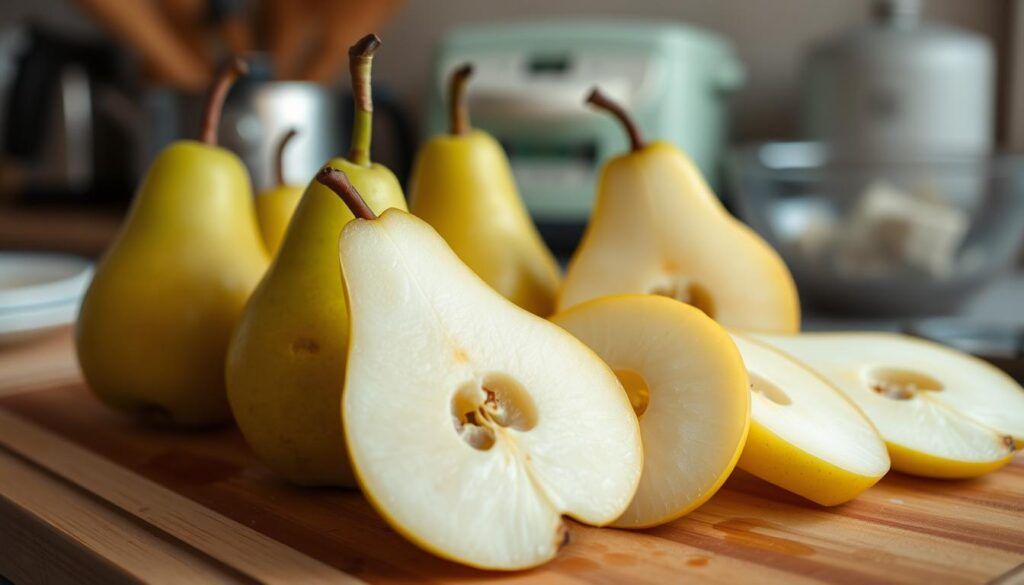
I’ve discovered some effective methods to keep pears fresh for your recipes. Storing pears for cooking needs some planning, but it’s worth it.
Ideal Methods for Cooking Pears
- Choose slightly firm pears for cooking.
- Ripen pears at room temperature before preparing.
- Use ripe but firm pears for baking and poaching.
Pairing with Other Ingredients
Pears go well with many foods, making them versatile in cooking. They’re perfect for both sweet and savory dishes. Here are some great pairings:
- Cheese plates with blue or goat cheese.
- Salads with walnuts and arugula.
- Desserts with chocolate or caramel.
Product offers are temporarily unavailable.
Keeping Pears Fresh for Dishes
To keep pears fresh for cooking, store them in a cool place. Avoid direct sunlight. If you won’t use them right away, the fridge can slow down the ripening process.
Pro tip: Check your pears daily and remove any that show signs of over-ripening to prevent spoilage of other fruits.
Innovative Storage Solutions

Keeping pears fresh needs smart storage ideas. I found some great ways to keep your pears crisp and tasty for longer.
Special Fruit Drawers: Your Pear’s Best Friend
Fruit drawers in your fridge are a big help for pears. They control humidity and temperature, making a perfect spot for pears. Set the drawer to a bit cooler and moderate humidity for best results.
- Control humidity levels.
- Maintain consistent temperature.
- Prevent premature ripening.

Vacuum-Sealing: A Modern Preservation Technique
Vacuum-sealing is great for storing pears for a long time. It removes air, slowing down the ripening process. It’s perfect for pears you’ll use later in cooking or baking.
| Storage Method | Estimated Shelf Life | Best For |
|---|---|---|
| Vacuum-Sealed | 4-6 months | Cooking, Baking |
| Refrigerator Drawer | 1-2 weeks | Fresh Eating |

Airtight Containers: Protecting Pear Freshness
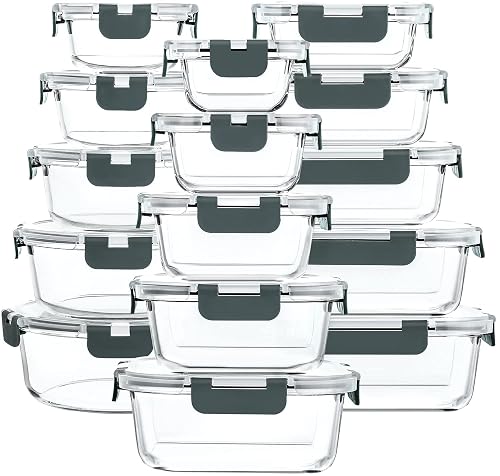
Airtight containers are key to keeping pears fresh. Select containers with adequate ventilation to prevent moisture buildup. Use containers with adjustable vents for the right humidity.
Utilizing these storage solutions can help prolong the shelf life of your pears. Enjoy fresh, delicious pears for more time.

Seasonal Considerations
Storing pears needs careful attention to seasonal changes. To keep pears fresh, it’s essential to understand how temperature and environment impact them. Each season brings its own challenges for storing pears correctly.
Summer Storage Strategies
Summer heat can quickly spoil pear quality. Here are some tips to keep your pears fresh during warm months:
- Keep pears away from direct sunlight.
- Store in a cool, consistent temperature area.
- Use refrigeration for ripe pears.
- Check fruits daily for signs of overripening.
Winter Pear Preservation
Winter storage needs different methods to protect your fruit. European pears can last from one to three months with proper care. The goal is to find a cool spot that doesn’t freeze.
Temperature’s Impact on Pear Quality
Temperature changes significantly affect the ripeness and storage of pears. The optimal storage temperature is between 30°F and 40°F. This slows down ripening and maintains high fruit quality. Remove pears from storage about a week before you plan to eat them, allowing them to ripen at room temperature.
Pro tip: Always handle pears gently and avoid bruising during seasonal transitions.
By adjusting your storage methods with the seasons, you’ll keep your pears fresh and tasty all year round.
Frequently Asked Questions (FAQs) on pear Storage
How long do pears typically last when stored properly?
Can I store pears with other fruits?
What’s the best way to freeze pears?
How do I know when a pear is ripe?
Can I speed up the ripening process for pears?
How can I prevent cut pears from browning?
What’s the best storage method for different pear varieties?
Final Thoughts About Pear Storage
Many people wonder about the best way to store pears. Knowing how to store pears can greatly improve their taste and texture.
Pears usually last 5 to 10 days at room temperature. Most varieties reach their best taste in about a week. To keep them fresh longer, refrigeration can slow down the ripening process. When you freeze pears, they can stay good for 8-12 months if done right.



Storing pears needs some thought. It’s not good to mix pears with other fruits because they release ethylene gas. This gas makes fruits ripen faster. It’s best to store pears alone or in dedicated fruit containers. Always check your pears daily and throw away any that are too ripe or spoiled.
Freezing pears is easy, but it needs a few steps. Peel, slice, and add lemon juice to prevent browning before freezing. Use airtight containers or freezer bags to avoid freezer burn. With these tips, you’ll learn how to store pears ideally and enjoy them all year.
Further Recommendations:
- Winterproofing the Garden
- A Beginner’s Guide to Growing Lettuce
- Exciting Edible Mushrooms
- Homesteading
- Beginner’s Guide to Growing Tomatoes
- The ultimate guide to growing Serrano Peppers in pots
- Ultimate Guide to Strawberries
- Discover the World of Peppers
- What are Heirloom Strawberries
- What not to plant with strawberries
- When to transplant strawberries
- Best Organic Fertilizers for Strawberries
- What is a Strawberry Tree?
- Stylish Gardening Arm Sleeves for Gardening
- What animals eat strawberries
- Do strawberries grow on trees?
- Best Outdoor Composting Bins
- Ultimate Guide to Kiwi Fruit
- Understanding Mushrooms
- How much cold can strawberries tolerate?
Video: How to tell if your pear is ripe & how to store them.
Reference Links
- Summer and Fall Pear Grades and Standards – USDA
- Pears – UMD
- Growing pears in the home garden – UMN
- Pear Rust – OSU

Leave a Reply